Should You Play Hollow Knight Before Silksong?
Play Hollow Knight first for richer world context and a smoother learning curve, but Silksong's new kingdom also works as a starting point.
Automated drafting assistance was used in preparing this article; sources and publication remain subject to CheckpointDB editorial review.
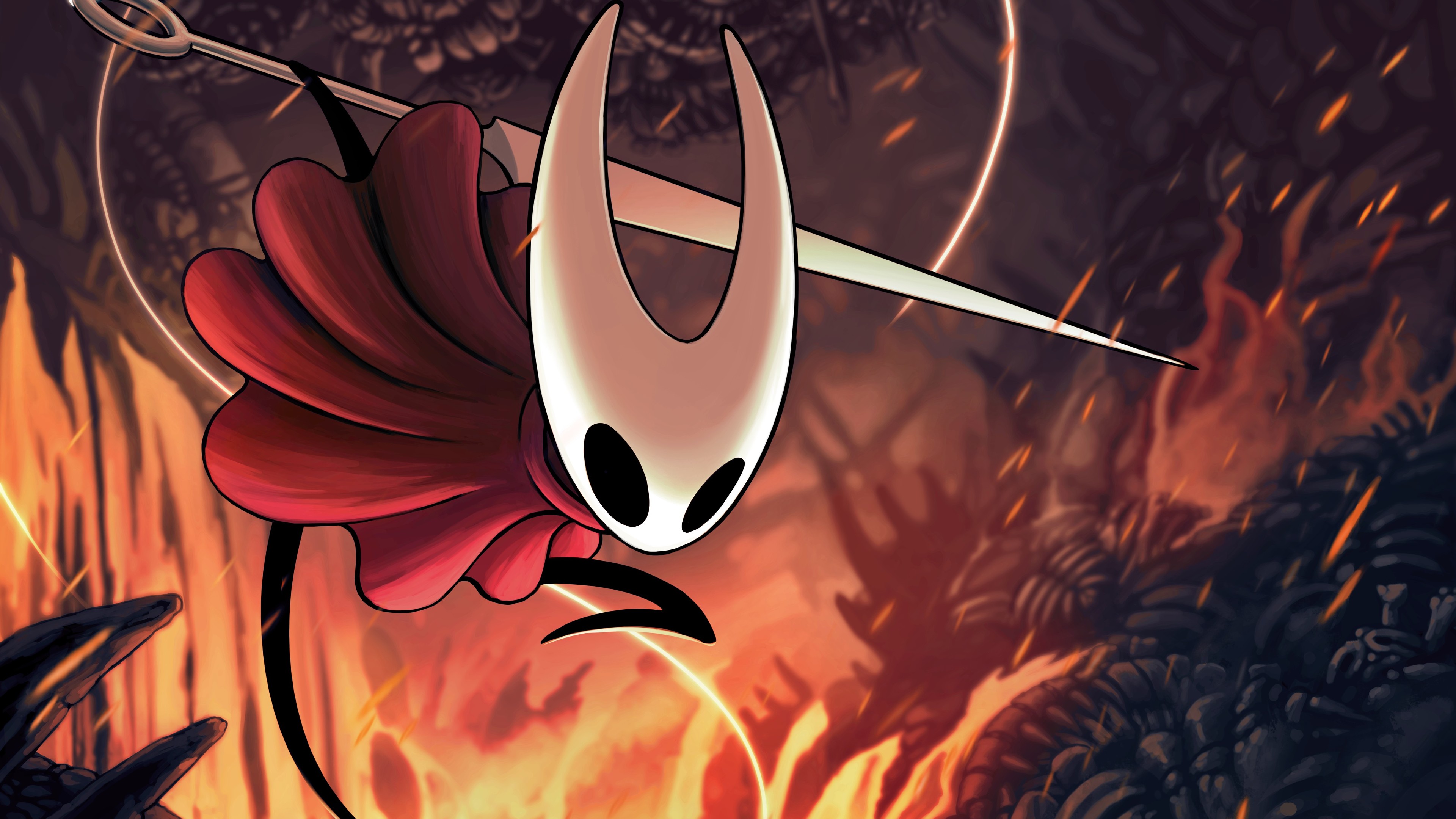
Yes, play Hollow Knight before Hollow Knight: Silksong if you expect to play both. The original gives Hallownest's history and Hornet's earlier role more weight, and its measured opening is a friendlier introduction to exploration and map reading. You can still start with Silksong: it follows Hornet into a different kingdom and gives her a new immediate goal.
Silksong has been fully released since September 4, 2025, so this is no longer a question about preparing for an unknown sequel. Both games are available now, both tell complete adventures, and Team Cherry presents Silksong as a sequel rather than a replacement. Release order offers the richest context, while starting with the game whose movement and setting interest you most offers the fastest route to enjoyment.
Why Hollow Knight is the better first game
Hollow Knight begins with a small, quiet traveler entering the ruined kingdom of Hallownest. Team Cherry's official description emphasizes choosing your own path through caverns, ancient cities, wastelands, and strange communities. The game teaches that world gradually. Basic movement comes first; maps, charms, abilities, and harder routes accumulate as curiosity pulls you farther from safety.
That pace makes it a strong introduction to Team Cherry's design language. Benches matter. Currency can be lost. A newly found movement ability changes how you read old rooms. Characters speak indirectly, and architecture often carries as much history as dialogue. Learning to tolerate uncertainty is more important than memorizing a route.
The story benefit is equally simple. Hornet is part of Hallownest before she becomes Silksong's protagonist. Meeting her in the original establishes how she moves, what she protects, and why her perspective differs from the Knight's. Silksong can introduce its playable hero to newcomers, but prior familiarity adds meaning to her change in role. This is a recommendation about emotional and thematic context, not a claim that every original ending is required.
Hollow Knight is also newly convenient on current hardware. In February 2026, Team Cherry released upgraded versions for Nintendo Switch 2, PlayStation 5, and Xbox Series X|S, with higher frame rates, resolutions, and visual effects. Owners on earlier console families received free upgrade paths where supported, while PC gained display and under-the-hood improvements. Starting with the original no longer necessarily means accepting a visibly older console build.
Why Silksong can be your first Hollow Knight game
Silksong moves the action to Pharloom, a kingdom ruled by silk and song, and puts Hornet on an ascent toward its peak. Team Cherry describes new lands, powers, allies, mysteries, and combat against hunters, beasts, assassins, and rulers. That destination gives the sequel a local conflict it can establish without making Hallownest's full history the opening assignment.
Hornet also feels different to control. Her movement is taller, faster, and more acrobatic, while tools and crests create a different approach to combat and preparation. If trailers of that speed are what drew you in, beginning with the slower original could feel like postponing the thing you actually want. Starting with Silksong sacrifices some recognition, not basic playability.
There is a second practical reason: Silksong launched across PC, Mac, Linux, Nintendo Switch, Nintendo Switch 2, PlayStation 4, PlayStation 5, Xbox One, and Xbox Series X|S, with Game Pass availability at release. Access is broad. If it is already in your library or subscription, trying it now is more useful than waiting for the perfect order.
The caution is mechanical rather than narrative. Silksong's early enemies and movement ask for confidence, and its systems build on lessons Team Cherry spent an entire game teaching. An experienced action-platform player may welcome that pace. A newcomer who struggles with navigation, pattern recognition, or losing progress may find Hollow Knight's opening a more readable classroom.
How much Hollow Knight should you finish?
You do not need a completion percentage target. Follow the central journey until you reach an ending, then decide whether unanswered paths still feel exciting. The original includes optional regions, bosses, charms, and substantial late challenges; clearing all of them is not a prerequisite for understanding Hornet's new adventure.
For the best story foundation, pay attention to Hornet's encounters and the broad history of Hallownest. Avoid looking up a full lore explanation before playing. Hollow Knight communicates through fragments, and deciding how those fragments fit is part of its appeal. A short recap after reaching an ending can clarify names without revealing discoveries you might still make yourself.
If difficulty blocks you, it is reasonable to move on. Practice a boss in short sessions, change charms, explore another branch, or consult a targeted route hint. Watching the remainder of an original-game storyline and beginning Silksong is better than burning out on an optional challenge. “Play Hollow Knight first” describes an order, not a demand for total completion.
What carries over, without spoilers
The most valuable carryover is familiarity with Hornet. You will know her visual language, fighting style, voice, and place in Hallownest before seeing how a new kingdom treats her. You will also recognize Team Cherry's habits: hidden walls, compact environmental clues, unusual merchants, and routes that become meaningful only after earning a new ability.
Do not expect equipment to transfer. Silksong builds its own progression around Hornet, its own tools, and the systems of Pharloom. Prior mechanical skill carries over informally—spacing, healing discipline, and the instinct to revisit old paths—but your original save is not presented by Team Cherry as required access to the sequel.
Some deeper story connections naturally reward knowledge of Hollow Knight. Explaining them would undermine a spoiler-light guide. The safe distinction is this: Team Cherry confirms Silksong as a sequel starring Hornet in a new kingdom; the judgment that the original makes every connection richer is editorial analysis.
Is now a good time to start Silksong?
Yes. Silksong is a released game, and Team Cherry has continued patching it. Patch 5, announced in March 2026, included localization work, fixes, and balance or behavior adjustments. The studio described it as the last significant update before the major Sea of Sorrow expansion.
No release date for that expansion appears in the cited Patch 5 post. Waiting for it is therefore a preference, not a scheduling necessity. Start now if you want the current complete campaign; wait only if you personally prefer returning when a major expansion is available. Do not treat unannounced timing or fan theories as confirmed plans.
The best order for different players
- You want the strongest story context: Hollow Knight, then Silksong.
- You are new to exploration-heavy action games: Hollow Knight first for its steadier ramp.
- You already love demanding platformers: Either game works; choose the movement style you prefer.
- You mainly want to play as Hornet: Start with Silksong and return to Hollow Knight for history.
- You plan to complete both: Release order avoids turning later references into earlier spoilers.
Hollow Knight first remains the best general recommendation. It introduces the world's storytelling methods, makes Hornet's promotion to protagonist more meaningful, and now has polished current-generation versions. Silksong remains a legitimate entry point because Pharloom is a fresh setting with its own climb, cast, and conflict.
Choose the original for context. Choose the sequel for immediacy. Neither choice is wrong, but release order gives each game's discoveries the most room to land.