Fallout 3 vs New Vegas vs Fallout 4: Which Should You Play First?
Choose your first modern Fallout by priority: Fallout 3 for discovery, New Vegas for role-playing choices, or Fallout 4 for combat and crafting.
Automated drafting assistance was used in preparing this article; sources and publication remain subject to CheckpointDB editorial review.

Start with Fallout 3 if you plan to play all three: its 2008 design establishes the modern first-person Fallout formula, and moving forward makes each mechanical change easy to appreciate. Start with Fallout: New Vegas if dialogue, factions, and character builds matter more than polish. Start with Fallout 4 if responsive shooting, scavenging, weapon crafting, and settlement building are what will keep you playing. Each tells a standalone story, so the right first game is the one that matches your motivation.
The quick comparison
| Game | Best first choice for | Main tradeoff |
|---|---|---|
| Fallout 3 | Lonely exploration, environmental stories, and a strong first look at the wasteland | The oldest combat, interface, and quest design of the three |
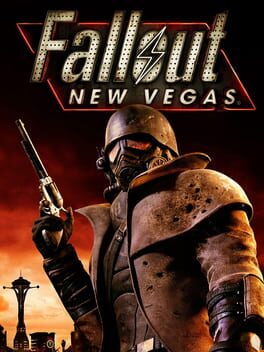
| Fallout: New Vegas | Dialogue builds, faction politics, and choices with visible consequences | Rough presentation and a world that can feel less inviting to wander without a goal |
| Fallout 4 | Real-time combat, collecting, crafting, and building a long-term sandbox | A more defined protagonist and fewer granular dialogue checks than New Vegas |
There is no continuity test. Fallout 3 takes place around Washington, D.C.; New Vegas moves west to the Mojave; Fallout 4 centers on Boston and the Commonwealth. They share the setting's history, institutions, technology, and dark humor, but each introduces a new player character and regional conflict.
Choose Fallout 3 for discovery and atmosphere
Fallout 3 is the strongest starting point for someone who wants the wasteland to feel unknown. Leaving Vault 101 frames the Capital Wasteland as a frightening expanse rather than a checklist. Distant landmarks create direction, while ruined buildings, radio signals, terminals, and isolated communities reward detours. The game's most memorable quality is often the space between formal quests.
Its role-playing uses the S.P.E.C.I.A.L. attributes, skills, perks, Karma, and dialogue checks that define this era of Fallout. V.A.T.S. lets you pause combat, target body parts, and make statistics visible inside a first-person game. That makes an imperfect shooter easier to read as an RPG: weapon skill, action points, positioning, and limb damage matter as much as raw aim.
The cost is age. Movement is stiff, feedback is limited, and many interiors share a visual language. Some moral decisions are sharply binary. If those qualities break immersion rather than creating texture, forcing yourself through Fallout 3 first is unlikely to improve the later games. But if you can accept their era, the Capital Wasteland provides the cleanest introduction to vaults, scavenging, radiation, and Bethesda's style of environmental exploration.
Pick Fallout 3 first when: you enjoy wandering toward a shape on the horizon, reading abandoned spaces, and feeling vulnerable before your build becomes powerful.
Choose New Vegas for role-playing and consequences
New Vegas is the recommendation for players who ask, “What kind of person can I be?” before “How good does the shooting feel?” Obsidian built its Mojave around competing interests. Major powers want control of Hoover Dam, smaller communities have their own needs, and your reputation can differ from one group to another. A helpful act in one place does not erase hostility somewhere else.
Skills frequently open explicit dialogue or quest solutions. Speech can avoid a fight, Science can reframe a technical problem, and specialized knowledge may reveal an option another character would never see. Those checks make character creation feel consequential outside combat. The faction structure also encourages replaying with a different allegiance rather than merely changing weapons.
New Vegas adds practical complexity. Ammunition types, weapon condition, crafting, companion abilities, and the optional Hardcore mode create more systems to manage. That depth is appealing when you want to plan a build, but it can make a first hour feel denser than Fallout 3 or Fallout 4.
Its world is deliberately organized around roads, settlements, and political boundaries. That supports coherent quest chains, yet players who primarily love freeform spelunking may prefer Fallout 3's ruined maze. The technology and animation are still built on the older foundation, so narrative sophistication does not mean modern presentation.
Pick New Vegas first when: you want conversations, faction reputation, multiple quest approaches, and a build that expresses a role rather than only a combat style.
Choose Fallout 4 for combat, crafting, and a personal sandbox
Fallout 4 is the easiest entry for players accustomed to newer action games. Guns feel more immediate, movement is smoother, and V.A.T.S. slows the action instead of fully freezing it. Bethesda explicitly designed the game to combine full-featured shooter play with statistics and character customization, so a player can rely on manual aim without abandoning perks or tactical targeting.
Scavenging also gains a clearer purpose. Junk breaks down into components used to modify weapons and armor or construct settlements. A desk fan is no longer only vendor clutter; its screws may complete a scope or generator. That loop gives exploration a constant material reward and lets players turn neglected locations into personalized bases.
The Workshop system can become a game of its own, but it is optional enough to keep a story-focused run moving. The larger compromise is role definition. Your protagonist has a voiced performance, a family-centered opening, and a more compressed dialogue interface. Factions still ask for meaningful commitments, but individual conversations expose less numerical character-building detail than New Vegas.
Fallout 4 is therefore not simply the older games with better controls. It shifts emphasis from skill-sheet expression toward physical exploration, equipment improvement, and construction. Players who enjoy turning every trip into supplies for the next project may spend longest here. Players who want dialogue to recognize an unusual specialist build may find the streamlined approach restrictive.
Pick Fallout 4 first when: you need satisfying moment-to-moment action, like upgrading gear, or want a wasteland that doubles as a building sandbox.
The best order if you want to play all three
Use release order: Fallout 3 → Fallout: New Vegas → Fallout 4. New Vegas shares enough structure with Fallout 3 that its added traits, faction reputation, and quest density are immediately legible. Fallout 4 then modernizes movement, shooting, crafting, and presentation. Reversing that sequence can make the older interfaces harder to tolerate.
Do not turn release order into homework. These are large games, and finishing every location before moving on will blur their strengths. Follow the main story far enough to understand each region, complete the faction and companion quests that interest you, and stop when exploration becomes routine. Downloadable expansions can wait until you know which game's design you prefer.
For most RPG-focused newcomers, New Vegas is the best single recommendation. For a complete tour, Fallout 3 is the right beginning. For someone who has already abandoned older first-person RPGs because of their controls, Fallout 4 offers the best chance of turning curiosity into a lasting interest. The series does not demand one entrance; it offers three different reasons to step out of the vault.