Resident Evil Games in Order: The Fastest Story Paths to Requiem
Follow the shortest Resident Evil routes to Requiem, with a two-game core path and optional stops for series history and modern context.
Automated drafting assistance was used in preparing this article; sources and publication remain subject to CheckpointDB editorial review.

The fastest useful path to Resident Evil Requiem is Resident Evil 2 followed by Resident Evil 4. Add Resident Evil first if you want the series' survival-horror foundation, and play Resident Evil Village if you also want a recent example of Capcom's balance between fear and action. None of them is compulsory before starting Requiem.
That recommendation is built around story relevance and variety, not a claim that every numbered entry can be skipped without losing a reference. Capcom describes Requiem as a story running through the series' lore, set in the ruins of Raccoon City and connected to the Raccoon City Incident. The two-game core route therefore prioritizes that city and a central returning hero while avoiding a nine-game commitment.
Requiem released on February 27, 2026, for PlayStation 5, Xbox Series X|S, Nintendo Switch 2, and PC. This guide is spoiler-light and written for someone deciding what to play before—or after beginning—the newest chapter.
The two-game fast path: Resident Evil 2, then Resident Evil 4
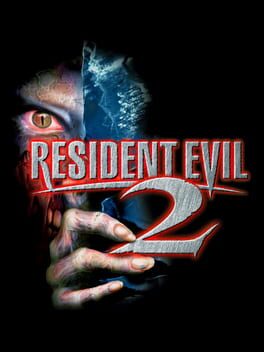
Start with Resident Evil 2. Its crisis unfolds in zombie-infested Raccoon City after the mansion incident, and Capcom credits the 1998 game with establishing the series' reputation for detailed storytelling. It gives you the most efficient grounding in the location, institutional failure, and human cost that echo through Requiem's official premise.
The linked game is the 1998 original. A modern remake retells that disaster with different presentation and some structural changes; either version supplies the essential Raccoon City context. Choose based on your tolerance for older controls and fixed-camera-era design. Historical authenticity favors the original, while a modern version is usually the smoother path for a first-time player.
Continue with Resident Evil 4. It moves beyond Raccoon City and puts far more emphasis on over-the-shoulder combat, pressure, and forward momentum. Capcom calls the 2005 release a complete revamp of the game system, and that change matters to Requiem preparation: the new game deliberately spans survival horror and action rather than committing to only one pace.
Resident Evil 4 is also the shortest way to spend substantial time with Leon without following every appearance across the franchise. Again, the linked record is the original release, while a later remake offers a contemporary alternative. For this route, the important choice is not original versus remake; it is experiencing how the series can turn a familiar survivor into the lead of a faster, more combat-driven game.
The four-game route for broader context
If you have room for two more campaigns, use this order:
- Resident Evil — learn the original mansion formula.
- Resident Evil 2 — see the Raccoon City disaster expand beyond one isolated location.
- Resident Evil 4 — follow the series' shift toward over-the-shoulder action.
- Resident Evil Village — sample Capcom's recent technology, first-person tension, and action-horror rhythm.
- Resident Evil Requiem — enter the anniversary chapter with both historical and modern reference points.
The first Resident Evil belongs here because Capcom identifies its 1996 release as the beginning of the series. Its limited resources, locked spaces, puzzles, and route planning establish the basic grammar that later games repeatedly revise. It also makes Resident Evil 2's larger urban emergency feel like an escalation rather than an isolated opening.
Village is useful for a different reason. Capcom describes it as the sequel to the seventh installment and a mix of horror and battle-driven action in a hostile village. It runs on the RE Engine, the same technology family Capcom highlights when discussing Requiem's visual detail. That makes Village a good modern-mechanics bridge even though it is not the most direct route into Raccoon City's history.
This four-game path is an editorial recommendation, not Capcom's official required order. It deliberately leaves gaps. The series has recurring organizations, incidents, and characters, but Requiem was released as a new main installment rather than an exam on every prior campaign.
Which games can you safely skip?
You can skip the first Resident Evil if dated design is likely to stop your run. Resident Evil 2 explains enough of its immediate situation to function as the starting line, and Requiem's connection to Raccoon City makes that a more targeted use of limited time.
You can skip Village if your only goal is story preparation. It is valuable as a modern play-feel comparison, but its family storyline is not the core of this guide's Raccoon City-to-Leon route. Conversely, if you care more about controls and atmosphere than continuity, playing Village alone before Requiem is a reasonable current-era sample.
You can also stop any older game and watch its remaining official story material if its mechanics become the barrier. Resident Evil's identity has changed repeatedly across three decades. A fixed-camera survival game, an over-the-shoulder action game, and a first-person horror game ask for different skills; disliking one format does not predict whether Requiem will work for you.
What Requiem context is confirmed?
Capcom's published material confirms several points. Requiem is the ninth main installment, returns to a devastated Raccoon City, and uses a new protagonist, FBI analyst Grace Ashcroft, to investigate truths connected to the past. Capcom also presented the game around complementary horror and action experiences, with first-person and third-person perspectives available.
Those facts explain this guide's priorities. Resident Evil 2 supplies the city. Resident Evil 4 supplies an action-focused Leon chapter. The first game supplies the origin of the series' fear, exploration, and puzzle-solving. Village supplies a recent RE Engine benchmark.
It would be speculation to promise that a specific puzzle, enemy, or minor character from those games is necessary. It would also be misleading to call Village a direct prequel to Requiem. Treat the route as a way to recognize Capcom's design history and major recurring context while letting the new game's revelations arrive on their own terms.
The best route for your available time
With one game, choose Resident Evil 2. With two, add Resident Evil 4. With three, put the original Resident Evil at the front if you enjoy methodical survival horror, or put Village at the end if modern presentation matters more. With four, play the full recommended route.
That order is fast because every stop has a distinct job. It avoids padding the list with entries that are excellent but less efficient for this particular question. Requiem works as the destination; Raccoon City, Leon's evolution, and the series' changing balance of fear and action provide the map.