Modern Roguelites Compared: Strategy, Action, and Short-Run Picks
Compare five modern roguelites by run length, difficulty, strategy, action, and progression to find the right game for your available time.
Automated drafting assistance was used in preparing this article; sources and publication remain subject to CheckpointDB editorial review.

Choose FTL: Faster Than Light for improvisational ship management, Into the Breach for compact turn-based tactics, Slay the Spire for deck-building decisions, Hades for responsive action and character-driven storytelling, or Vampire Survivors for simple controls and rapid power growth. All reward repeated attempts, but they ask for different kinds of attention. Your ideal first roguelite depends on whether failure should feel like a lesson, a story beat, or an invitation to start another short run immediately.
Quick recommendations by play style
| Game | Best for | What a run tests | Main friction |
|---|---|---|---|
| FTL | Improvisers and systems thinkers | Resource allocation under uncertainty | Losses can follow decisions made much earlier |
| Into the Breach | Tactics players who like readable information | Positioning and damage prevention | Small mistakes can cascade across a mission |
| Slay the Spire | Deck builders and probability planners | Building a coherent deck from imperfect choices | Strong play requires learning enemies and card interactions |
| Hades | Action players who still want an unfolding story | Execution, build adaptation, and persistence | Reflex demands remain even after permanent upgrades |
| Vampire Survivors | Players seeking low-input spectacle and quick progression | Movement, upgrade selection, and crowd control | Early simplicity can feel passive to players wanting direct attacks |
These games share randomization and repeated failure, not one universal formula. Some carry power between attempts; others primarily carry knowledge and unlocked options. Ask what you want to improve: your plan, your reactions, or the range of future possibilities.
FTL: best for emergent crisis management
FTL makes you captain, engineer, and emergency dispatcher aboard one ship crossing a randomly generated galaxy. Power must move among shields, weapons, engines, oxygen, medical systems, and specialized equipment. Crew members repair damage, repel boarders, operate stations, and sometimes die because one fire spread while you were handling another emergency.
Subset Games frames encounters around multiple solutions. A missile barrage might prompt an escape, a weapons surge, or a boarding action. That makes FTL's stories systemic rather than scripted: the memorable part is often how a damaged ship survived with one crew member and no oxygen in half its rooms.
Choose FTL if uncertainty is exciting. Decisions about fuel, scrap, routes, and upgrades create consequences several jumps later. Pausing lets you issue orders, so the challenge is not pure speed, but incomplete information and competing priorities.
The tradeoff is opacity. A run may fail because its weapons cannot overcome a defense you did not prepare for. Players who need every loss to follow from one visible mistake may prefer Into the Breach.
Into the Breach: best for precise turn-based tactics
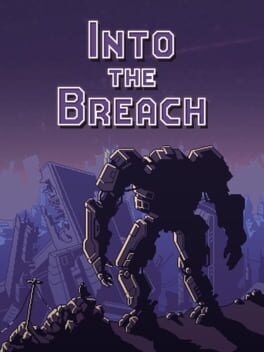
Into the Breach turns each battle into a small board state. Enemy attacks are telegraphed before they resolve, giving you a chance to kill the attacker, move its target, block the attack, or push the enemy into a worse position. Civilian buildings power the grid, so protecting people can matter more than preserving a mech's health.
That information changes the emotional rhythm. FTL asks you to manage a crisis already happening; Into the Breach asks you to inspect a forecast and prevent it. A turn can take seconds to execute and several minutes to understand. Pushing one enemy may interrupt two attacks but send another into a building. Friendly fire is always part of the geometry.
Choose it for deliberate play, short missions, and clean cause-and-effect. Randomized islands and equipment vary the larger campaign, but most tactical errors remain visible on the board. Failure permits a pilot to travel back and assist another timeline, connecting repetition to the premise without erasing the value of a failed campaign.
Small maps do not make the decisions casual. Calculating several interactions before every move can be mentally demanding despite the modest presentation.
Slay the Spire: best for deck-building strategy
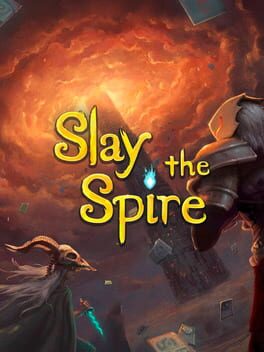
Slay the Spire combines a roguelike climb with a collectible-card structure contained inside each run. You choose a character, fight turn-based battles, add cards, acquire relics, and select routes through encounters, shops, rest sites, elites, and bosses. Mega Crit's official description emphasizes four characters, hundreds of cards, varied encounters, relics, and procedurally generated levels.
The central skill is not collecting every strong card. It is building a deck whose pieces support one another while remaining able to block, scale damage, and answer the enemies ahead. Skipping a reward can be better than diluting a reliable draw. A route rich in elite fights may provide powerful relics while leaving too little health for the boss.
Choose Slay the Spire when you enjoy evaluating probabilities without real-time pressure. Individual fights can be paused indefinitely, and the game exposes damage values before you commit. Runs still demand adaptation because the perfect card or relic may never appear.
Its learning curve depends on knowledge. Enemy intentions are visible, but recognizing patterns and viable decks takes repetition. If reading cards feels like administration, Hades or Vampire Survivors provides more physical momentum.
Hades: best for action with continuing story
Hades is a fast action dungeon crawler about Zagreus attempting to escape the Underworld. Each run combines a weapon with divine boons from different Olympians, creating builds around attacks, special moves, casts, dashes, status effects, and synergies. Supergiant describes the game as never producing the same experience twice while continuing to reveal character events and new builds.
Its distinctive strength is that returning home advances relationships and dialogue. Defeat does not merely reset a menu; it brings Zagreus back to a changing household where characters react, requests develop, and the larger conflict gains context. That structure gives story-focused players a reason to accept repetition.
Choose Hades when execution feels rewarding. Positioning, attack timing, dashing, and reading enemies matter throughout a run. Permanent resources unlock weapons, talents, and other advantages, but upgrades do not remove the need to act well.
That is also the barrier. Players with limited dexterity may find repeated boss fights tiring. Optional God Mode increases damage resistance over failed attempts, making this the most accommodating action choice here without eliminating combat.
Vampire Survivors: best for immediate, low-input runs
Vampire Survivors reduces direct combat input so movement and upgrade selection can take center stage. Weapons attack automatically while growing crowds compress the safe space around your character. Experience gems produce level-up choices, compatible items can evolve, and accumulated gold buys upgrades that strengthen later survivors.
Choose it when you want to understand the premise within minutes. The controls work well for short sessions, and a run's curve from fragile survivor to screen-filling damage delivers visible growth quickly. The official store description calls it a time-survival game with minimalistic play and roguelite elements; that is more accurate than treating it like a conventional shooter.
The simplicity hides planning. Movement determines which experience you recover, upgrade choices compete for limited slots, and dense waves expose unfocused builds.
Players who need active offense may feel detached because weapons fire on their own. For everyone else, that reduced input is the point: attention shifts from aiming at one enemy to shaping a build that can withstand thousands.
Which roguelite should you start with?
Start with Vampire Survivors if accessibility and short feedback loops matter most. Start with Hades if you already enjoy action games and need story to soften repetition. Start with Slay the Spire if cards and deliberate planning are the attraction. Choose Into the Breach for the clearest tactical information, and FTL for the messiest, most memorable improvisation.
Do not judge the category by whether you win immediately. Early attempts are reconnaissance: learning threats, discovering combinations, and deciding what risks suit you. The right game makes that learning enjoyable before victory arrives. When a failed run produces a clear idea for the next one, the loop is already working.