Best Short Story Games for a Weekend: Choose by Mood and Play Style
Pick a short weekend story game by mood: Journey for wonder, Firewatch for conversation, Edith Finch for memory, or Inside for tension.
Automated drafting assistance was used in preparing this article; sources and publication remain subject to CheckpointDB editorial review.
Choose Journey for quiet wonder and low-friction exploration, Firewatch for dialogue and an adult mystery, What Remains of Edith Finch for an emotional anthology, or Inside for wordless tension and environmental puzzles. All four fit comfortably into a weekend because they focus on a single authored arc rather than ongoing progression. The better question is not which is universally best, but how you want to feel while playing.
Quick recommendations by mood
| If you want… | Start with… | Know before playing |
|---|---|---|
| Calm, beauty, and room for interpretation | Journey | Its story is communicated without conventional dialogue |
| Character chemistry and a grounded mystery | Firewatch | Conversation matters more than puzzle difficulty |
| Variety and an emotionally direct family story | What Remains of Edith Finch | Its subject is death, including the deaths of children |
| Suspense, pursuit, and physical puzzles | Inside | The atmosphere is bleak and the violence can be unsettling |
These games are short because their designs are concentrated, not because they are unfinished. Each limits systems so pacing, environment, and performance can carry unusual weight. That makes them good palate cleansers after a sprawling RPG, but it also means the central mood is difficult to escape. Pick for the evening you actually have, not the backlog category you think you should clear.
Journey: best for wonder without exposition
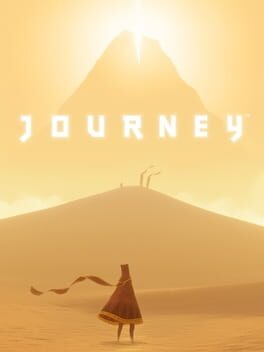
Journey places a robed traveler in a desert and points toward a distant mountain. From there, movement and observation do most of the storytelling. You cross ruins, gather the ability to glide, and infer what happened through murals, architecture, sound, and changes in the landscape. Annapurna's official description emphasizes that the world can be explored alone or with a fellow traveler.
That companion system is unusual because it does not turn the game into a chat room. A stranger may appear, communicate through a musical call, help reveal a path, or simply share the walk. You cannot depend on meeting someone, and you do not need a partner to finish. The possibility adds warmth without replacing solitude.
Choose Journey when you want to decompress. It asks for enough interaction to make movement expressive but rarely interrupts its rhythm with text, inventory, or failure-heavy challenges. Its visual clarity also makes it approachable for someone who does not normally play games.
The tradeoff is abstraction. Players who need named characters, explicit motives, and spoken explanations may admire Journey more than connect with it. Its emotional arc depends on accepting symbol, music, and motion as the story rather than waiting for a plot briefing.
Firewatch: best for conversation and mystery
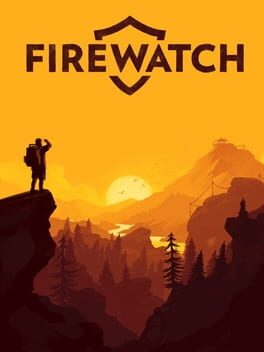
Firewatch follows Henry, who takes a summer job as a fire lookout in the Wyoming wilderness. His main human connection is Delilah, his supervisor, speaking over a handheld radio. Campo Santo describes the game as a single-player, first-person, story-driven mystery in which that relationship develops as troubling events disturb what should have been a retreat.
The radio gives walking a dramatic purpose. Dialogue choices let you shape Henry's immediate tone—open, evasive, playful, defensive—while the distance between the two characters keeps uncertainty alive. Exploring with a map and compass creates just enough friction to make the forest feel like a place rather than a corridor.
Choose Firewatch when performance and conversational chemistry matter more than mechanical challenge. It works especially well in one or two longer sessions because remembered exchanges color later calls. Pausing for a week between chapters can weaken that accumulation.
Its mystery should not be approached as a box of elaborate puzzles with a prize behind every clue. The stronger subject is why people retreat from painful circumstances and what they project onto incomplete information. Players seeking a power fantasy or a neatly triumphant resolution may resist where it lands. Players open to flawed adults and emotional ambiguity will find more to discuss after the credits.
What Remains of Edith Finch: best for variety and emotional impact
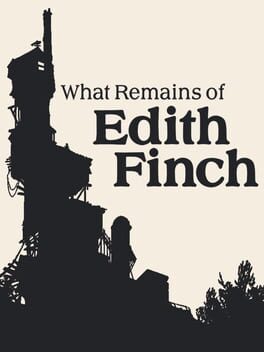
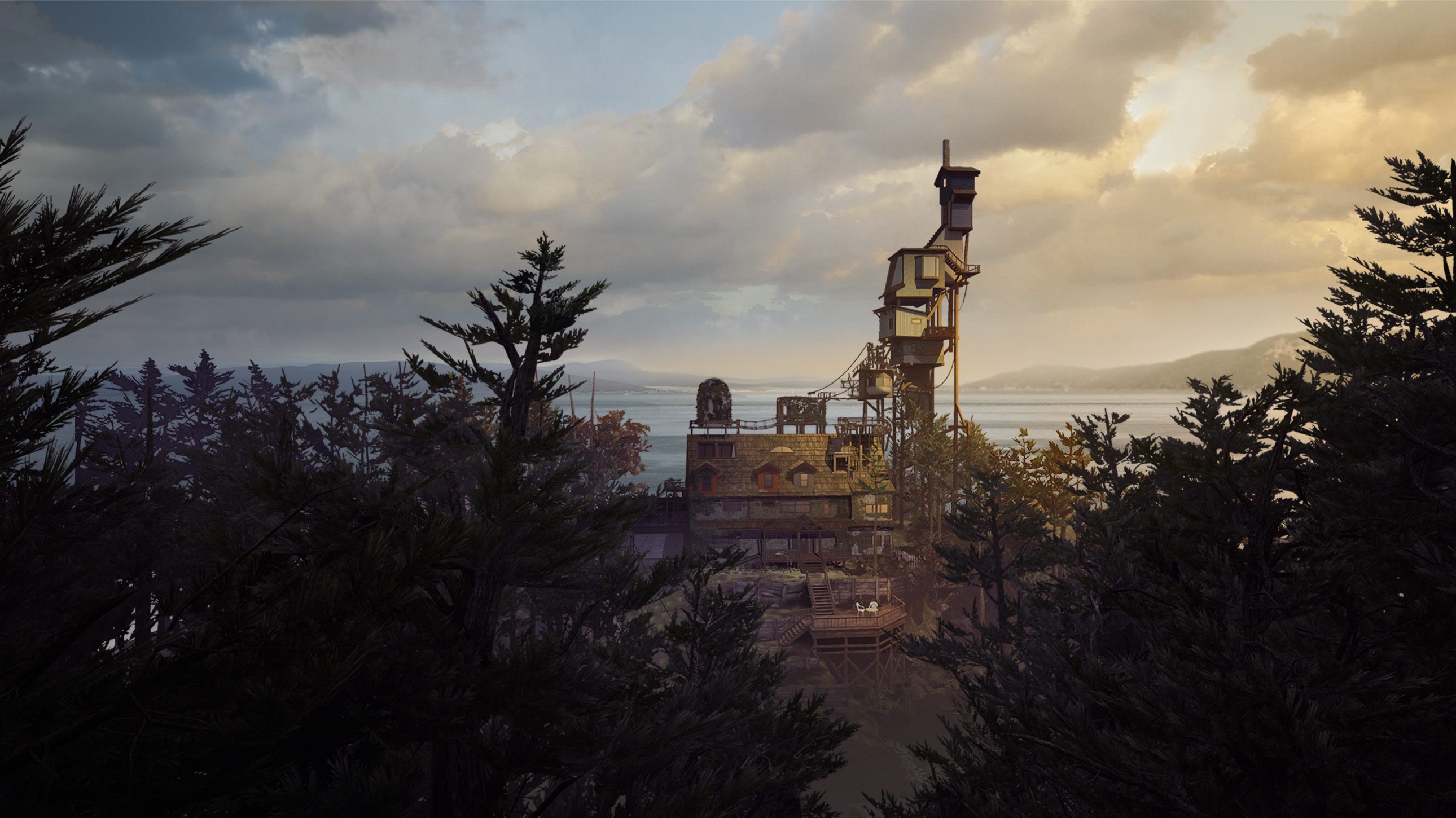
What Remains of Edith Finch sends Edith through her family's enormous Washington home to understand why she is the last surviving Finch. Each room preserves part of a relative's life. Discovering those spaces leads to short playable stories, and each story changes how interaction, perspective, and visual style work.
The anthology structure is its greatest strength. One sequence may turn routine work into an expanding fantasy; another uses the physical motion of a child's play. Giant Sparrow does not rely on one verb for the entire game. Mechanical changes let memory feel unstable, subjective, and specific to the person being remembered.
Choose Edith Finch when you want the most overtly literary of these four games or when novelty helps maintain attention. Its first-person exploration is straightforward, but the vignettes continually reset expectations. Annapurna's official page is unusually clear about the premise: every discovered story follows a family member on the day of their death. That is useful content guidance, not a spoiler to hide.
The tradeoff is emotional intensity. The game can be funny, affectionate, and visually playful, yet death is never far away. Play it when you have space to sit with grief and family mythology, not when you need uncomplicated comfort. Its compact length encourages one sitting, but taking a break between stories is entirely reasonable.
Inside: best for tension and environmental puzzles
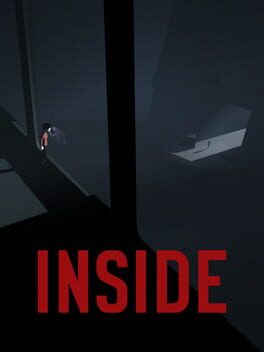
Inside begins with a boy moving through a hostile landscape and refuses to explain the world in dialogue or text. Running, climbing, hiding, moving objects, and solving spatial puzzles carry the experience. Animation and sound make even simple actions feel dangerous: a pause before a jump or the approach of a patrol communicates more than an objective marker could.
Choose Inside when “short story game” should still involve timing, threat, and problem-solving. Its puzzles are generally readable from the environment, while chase sequences make observation urgent. The side-on perspective keeps the controls concise, but the staging produces remarkable depth and scale.
The cost is discomfort. Inside is darker and more physically violent than the other selections. Its story is deliberately open to interpretation, but unlike Journey's invitation to wonder, the ambiguity here creates unease. It is a poor bedtime choice for someone sensitive to body horror or harm involving a child protagonist.
How to plan the weekend
For one evening, pick a single game and let the credits breathe. Journey works well when energy is low; Inside works when you want focus. Firewatch and Edith Finch benefit from attention to optional details, so do not rush every side path to satisfy an estimated completion time.
For a two-game weekend, pair contrasting moods:
- Journey + Inside: two wordless journeys, one expansive and one oppressive.
- Firewatch + Edith Finch: two first-person stories about absence, interpreted through very different structures.
- Journey + Edith Finch: accessible interaction followed by a denser emotional narrative.
- Inside + Firewatch: puzzles and pursuit first, character conversation second.
Avoid playing all four back-to-back merely because they are short. Their final images and unresolved questions are part of the experience. A little distance preserves what each is doing differently.
The safest general recommendation is What Remains of Edith Finch for players who already enjoy narrative games, Journey for newcomers or anyone seeking calm, Firewatch for dialogue-focused players, and Inside for people who need more mechanical tension. Short games are not one genre. These four prove that a focused weekend can hold meditation, conversation, memoir, or nightmare without demanding a season of your life.