A Plague Tale Games in Order Before Resonance
The best A Plague Tale play order before Resonance, with spoiler-light routes for newcomers, returning players, and anyone short on time.
Automated drafting assistance was used in preparing this article; sources and publication remain subject to CheckpointDB editorial review.

The best order is A Plague Tale: Innocence, then A Plague Tale: Requiem, followed by Resonance: A Plague Tale Legacy. That release-order route preserves the series' intended introductions, lets its mechanical changes unfold naturally, and gives Resonance's prequel story the context it is likely to reward. If August 27 is approaching and you have not played either earlier game, do not rush through both just to qualify: Resonance follows a different lead character and official material presents it as a new perspective on the same world.
The recommended A Plague Tale play order
For most players, the sequence is simple:
- A Plague Tale: Innocence — begin with Amicia and Hugo's first journey and learn the series' basic language of stealth, vulnerability, light, and environmental problem-solving.
- A Plague Tale: Requiem — continue their story after Innocence. Its emotional stakes and character relationships assume familiarity with the first game.
- Resonance: A Plague Tale Legacy — move backward in the timeline for Sophia's earlier story once you understand the people, ideas, and dangers that give the prequel added meaning.
This is a recommendation, not a continuity requirement published by Focus Entertainment. The confirmed facts are that Resonance is a prequel, takes place 15 years before the prior A Plague Tale story, and follows a younger Sophia. The judgment that release order will work best comes from how prequels usually use an audience's existing knowledge: an origin, recurring concept, or familiar name can carry more weight when the player recognizes what it will eventually become.
Why release order beats chronological order
Chronological order would put Resonance first, followed by Innocence and Requiem. That arrangement is tidy on a timeline, but chronology is not the same thing as a good first experience.
Innocence was built as the audience's introduction to this world. It establishes the rules gradually through characters who are also learning how to survive. Requiem then builds on both the relationship at the center of Innocence and the player's mechanical expectations. Starting there gives each reveal the context its creators originally had available.
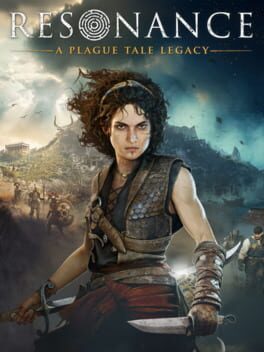
Resonance deliberately changes the perspective. Focus and Asobo describe Sophia as a capable young plunderer raised around violence, rather than a protagonist who avoids direct confrontation whenever possible. Official previews emphasize close-quarters combat, parries, traversal, puzzles, and one-against-many encounters. The setting also draws on the myth of the Minotaur and moves between medieval and ancient Minoan eras.
Those changes make Resonance more than “Innocence, but earlier.” They also make it a less useful substitute for learning what the previous games feel like. Playing in release order lets the shift toward a more combat-ready protagonist register as a purposeful new angle, not as the baseline that Innocence later removes.
Can you start with Resonance?
You probably can, but that is an editorial inference until the finished game is available and its full narrative structure can be assessed. The reasons are encouraging: Resonance stars Sophia, moves to the Minotaur's Island, and tells a story about her past rather than retelling Amicia and Hugo's journey. Its official description calls it an original story and a new perspective within the franchise.
That makes Resonance a reasonable starting point for someone who is primarily drawn to its mythology or more direct combat. It is also the practical choice if you would otherwise speed-read two story-heavy games, skip their optional conversations, and arrive exhausted. A play order should improve an experience, not turn entertainment into homework.
There are still tradeoffs. A prequel can explain an established mystery before a newcomer has learned why it matters. Returning characters may be introduced with less ceremony. Visual motifs or terminology may be designed to trigger recognition. None of those possibilities proves that starting with Resonance will be confusing, but they explain why release order remains the safer recommendation.
Choose the route that matches your time
The complete story route
Play Innocence and Requiem in full, then begin Resonance. This is the clearest route for players who value narrative continuity and character development. Avoid lore-summary videos unless you need a refresher; both earlier games communicate important information through performance, environment, and the experience of managing danger, not just plot events.
The returning-player route
If you finished both games but remember only the broad outline, revisit their opening and final chapters through your own save files, then read the in-game codex or chapter summaries where available. Focus on Sophia's prior role, the series' central supernatural concept, and where Requiem leaves the world. That refreshes context without replaying two complete campaigns.
The release-day route
If you are new and want to join Resonance at launch, start there. Treat it as your entry point, then play Innocence and Requiem in release order afterward. Do not jump directly from Resonance to Requiem merely because that looks closer chronologically; Requiem is explicitly the continuation of Innocence, and skipping the first game sacrifices the relationship on which the sequel depends.
The “one earlier game” route
If you can complete only one game beforehand, choose Innocence. It is the actual beginning and requires no recap. Requiem may contain more recent production values, but it is the weaker standalone choice because its central conflicts continue from the first game. After Innocence, decide whether to continue into Requiem or move to Resonance rather than forcing both into a deadline.
What Resonance changes—and what it does not
Resonance is not being marketed as “A Plague Tale 3.” It is a legacy story set before the two released games, centered on Sophia's search for answers about her past. Official material confirms a more direct combat system, larger combat spaces, light-manipulation puzzles involving a Minoan sphere, and a threatening presence that pursues Sophia through the island.
It remains connected to the franchise's identity. Asobo says the story is tied to the Macula's legacy and retains the mystery, tension, and emotional storytelling associated with A Plague Tale. The useful expectation is therefore “different playable strengths, related narrative foundations,” not either a total reinvention or a mechanically identical prequel.
That distinction matters for searchers asking whether they need prior games. You do not need to master Innocence's stealth encounters to prove you are ready for Resonance's parries. You play the earlier games for narrative and thematic context, not for a prerequisite skill test.
Confirmed release details before you plan
As of August 12, 2026, Resonance is scheduled for August 27, 2026 on PlayStation 5, Xbox Series X|S, and PC through Steam and the Epic Games Store. Focus Entertainment also confirms day-one Xbox Game Pass availability and Xbox Play Anywhere support. Release dates can still change, so check the publisher page if you are reading this guide much later.
The practical answer remains stable even if the date moves: play Innocence before Requiem, and place Resonance after them when you want the strongest contextual route. Start with Resonance only when its new protagonist or combat direction is the reason you are interested in A Plague Tale at all. Curiosity is a better entry point than chronology performed as an obligation.