Portal Games in Order: How Portal and Portal 2 Evolved Puzzle Design
Play Portal before Portal 2 to see Valve turn one elegant spatial rule into a richer puzzle language built for story, momentum, and co-op.
Automated drafting assistance was used in preparing this article; sources and publication remain subject to CheckpointDB editorial review.
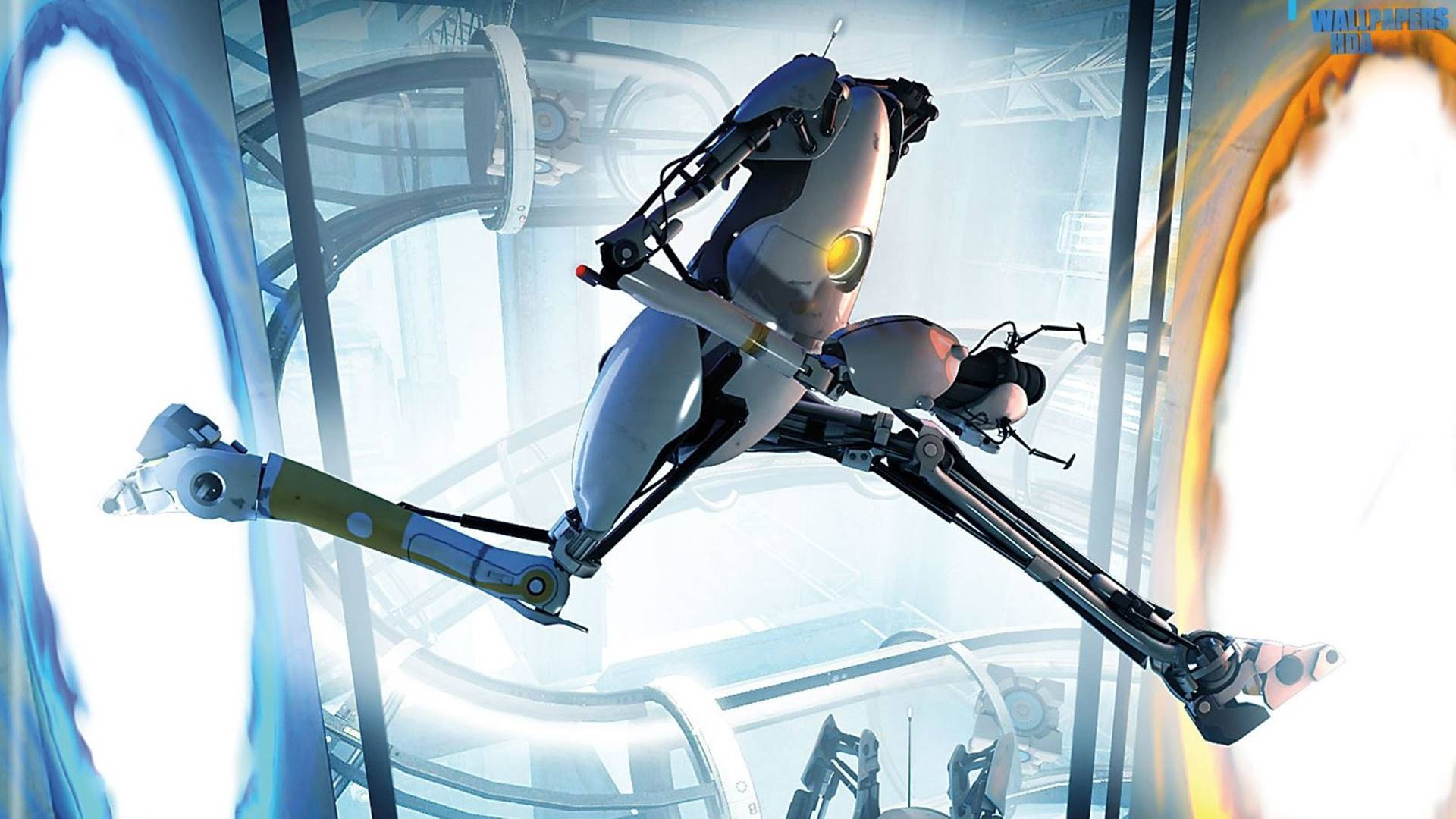
Play Portal first, then Portal 2. The original is the cleaner teacher: it introduces portals, momentum, object placement, and environmental observation without burying the central idea under extra systems. The sequel assumes that literacy, expands the vocabulary, and adds a separate two-player campaign. Starting with Portal 2 is possible, but it makes the first game feel like a stripped-back prototype instead of the precisely paced foundation it is.
The Portal games in order
The practical order is also the release order:
- Portal — the compact introduction to Aperture Science and single-player portal puzzles.
- Portal 2 single-player — the direct sequel, with a larger story and more puzzle elements.
- Portal 2 co-op — a separate campaign designed around two players and four active portals.
Finish Portal before moving on. In Portal 2, complete the single-player story before co-op if both players are new; the solo campaign teaches its new devices in a more controlled sequence. Co-op does not replace the story campaign, and it is not merely the same chambers with a second character. Valve describes it as a distinct campaign with its own story, test chambers, and playable robots.
There are community maps and Valve's testing tools after that, but they are extensions rather than another required chapter. The two numbered games contain the complete core progression a newcomer needs.
Why Portal is such an effective first lesson
Portal begins by restricting what you can do. Early chambers isolate one relationship at a time: where a portal may be placed, how two openings connect, what happens to an object crossing the threshold, and how preserved momentum can turn a fall into horizontal distance. That restraint is the design. Each room asks you to form a hypothesis, test it safely, and carry the result forward.
The game rarely needs a conventional tutorial panel because the architecture does the explaining. A camera angle reveals a destination. A clean white surface suggests a legal portal location. A button, cube, and door form a small causal chain. When a later room combines those pieces, the difficulty comes from recognizing relationships rather than remembering an arbitrary command.
That makes Portal a good first puzzle game for players who worry they are "bad at puzzles." Its chambers are authored around discovery, not a flood of inventory items or hidden statistics. Failure usually produces information: the angle was wrong, the timing was late, or the room contains a surface you have not considered. The short scope also means the learning curve reaches a satisfying conclusion before repetition dulls the central trick.
Its limitations are part of the appeal. Portal is single-player, visually spare, and mechanically concentrated. Players seeking a broad adventure may find it slight. Players who enjoy elegant rules will see why adding anything carelessly could have weakened it.
How Portal 2 expands the puzzle language
Portal 2 keeps the two-portal foundation but creates more kinds of sentences with it. Thermal Discouragement Beams redirect energy through space. Hard Light Bridges become movable floors, shields, and barriers. Aerial Faith Plates impose trajectories. Repulsion, Propulsion, and Conversion Gels alter how bodies move or where portals can be placed. Excursion Funnels carry the player and objects along reversible paths.
These devices change the key question. Portal often asks, "Where should the other opening go?" Portal 2 more frequently asks, "In what order should several systems interact?" A bridge may need to block a hazard before becoming a walkway. Gel may need to travel through portals before the player can use it. A funnel's direction can matter at two separate stages of one solution.
The sequel is bigger, but Valve's own product description makes an important distinction: its expanded physics support a wider range of challenges, not simply a harsher difficulty curve. The campaign usually introduces a device in isolation before combining it with earlier lessons. The result is broader rather than relentlessly harder.
There is a tradeoff. More devices create more visual and logical noise. Portal's best rooms can feel inevitable once understood; some sequel chambers ask you to scan a larger space for the one usable surface. If you prefer austere puzzle boxes, the original may remain your favorite. If you want variation, spectacle, and longer-form escalation, the sequel has far more range.
Story and space become part of the solution
The first game uses story as pressure around its chambers. Instructions become suspicious, backstage spaces challenge the official presentation, and the player's growing mechanical independence mirrors a loss of trust. Its humor is dry because the test environment still appears controlled.
Portal 2 turns Aperture itself into a historical object. Moving through different eras explains the facility through architecture, recorded voices, failed ambitions, and changing materials. The larger spaces are not just scenery between tests; they teach the player to read an industrial ruin with the same attention once given to a cube and button.
That scale permits more character performance and more explicit comedy, but it also changes the rhythm. Portal is a near-continuous line of compact deductions. Portal 2 alternates authored chambers with traversal, dialogue, and environmental storytelling. Choose the original when you want concentration. Choose the sequel when you want puzzles embedded in a fuller adventure.
Why Portal 2 co-op is a different design problem
Two players do more than double the available portals. They introduce coordination, divided attention, and trust. One player can maintain a route while the other moves through it; a solution can require synchronized switches or a launch timed around a partner's portal placement. The important resource becomes shared understanding.
That is why co-op works best with clear communication. Before acting, identify the destination, which surfaces each player controls, and what must remain open. Random portal firing creates confusion because replacing one opening can silently dismantle the other player's route. The built-in pointing and countdown tools support communication without requiring elaborate vocabulary.
Skill mismatch matters less than patience. An experienced player who announces every answer can reduce a partner to a button press. A better approach is to describe observations—"that bridge can cross the gap"—and let both people assemble the sequence. Co-op is at its best when the solution becomes a shared realization.
Solo players still receive the complete main narrative. Co-op is the stronger recommendation for anyone specifically searching for a puzzle game to play with a friend, but it should follow enough solo play that both people understand momentum and portal persistence.
Which Portal game should you play first?
Start with Portal unless one constraint overrides the order:
- You want the clearest introduction: Portal first.
- You care most about story and world-building: play both in order.
- You want a two-player puzzle game tonight: Portal 2 co-op works independently, though a short solo warm-up helps.
- You have already watched the first game's plot: still play Portal; knowing events does not replace learning its spatial rhythm.
- You bounced off Portal's clinical presentation: Portal 2 offers more characters, locations, and mechanical variety.
The series' progression is valuable because it is visible. Portal proves that one impossible tool can support a complete game when every room teaches with discipline. Portal 2 shows how to expand that tool without making it irrelevant, then demonstrates that cooperation changes the meaning of the same rules. Play them in order and the sequel feels less like “more Portal” than a study in how a puzzle language grows.