Time as a Tool, Time as a Tyrant: Contrasting Zelda's Temporal Philosophies
The concept of time is woven into the very fabric of The Legend of Zelda series, but no two games have explored it with such distinct and profound purpose as The Legend of Zelda...
Time as a Tool, Time as a Tyrant: Contrasting Zelda's Temporal Philosophies
| Game | Release Year | Metacritic | RAWG Rating | CheckpointDB Score | Key Genres | Key Platforms |
|---|---|---|---|---|---|---|
| The Legend of Zelda: Ocarina of Time | 1998 | 99 | 4.38 | 91.9 | Action, Adventure | — |
| The Legend of Zelda: Majora's Mask | 2000 | 95 | 4.34 | 88.4 | Action-Adventure, Adventure | Wii, Nintendo 64, 64DD, Wii U |
The concept of time is woven into the very fabric of The Legend of Zelda series, but no two games have explored it with such distinct and profound purpose as The Legend of Zelda: Ocarina of Time and its direct sequel, The Legend of Zelda: Majora's Mask. While they share an engine, visual style, and core mechanics, their relationship with time diverges completely. Ocarina of Time treats time as a grand, linear tool for adventure—a highway to be traveled. Majora's Mask, in stark contrast, presents time as a suffocating, cyclical theme—a prison to be managed. This fundamental difference reshapes every aspect of the player's journey, from narrative scope to moment-to-moment anxiety.
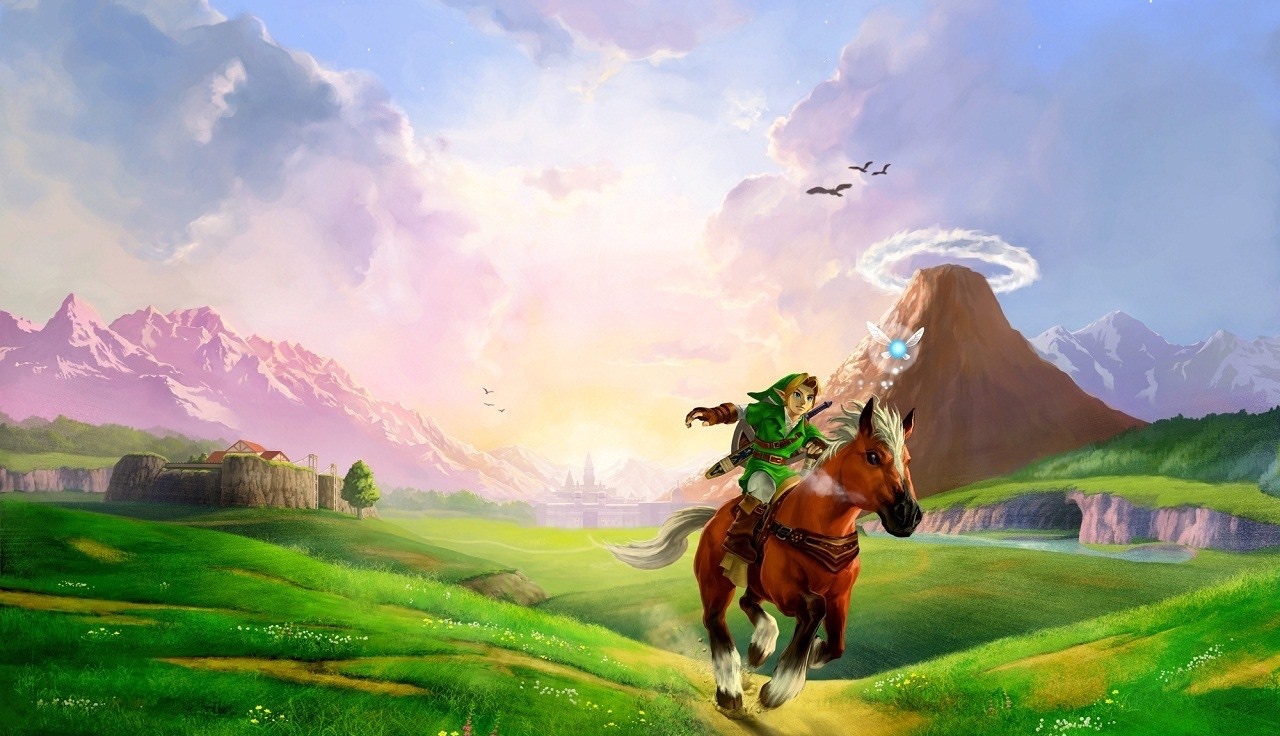
In The Legend of Zelda: Ocarina of Time, time is a mechanic of empowerment and scale. Link’s journey from child to adult is a one-way trip that fundamentally alters the world. Pulling the Master Sword from its pedestal doesn't just arm the hero; it catapults him seven years into a ruined future. This linear leap is the game's central architectural marvel. As a child, Link can access certain areas and interact with characters in specific ways. As an adult, the geography remains familiar, but it is transformed by decay and new threats, while previously unreachable areas open up. The ocarina itself, the titular instrument, allows Link to manipulate time on a smaller scale, playing melodies to change night to day or warp to specific temples. Here, time is a puzzle element and a narrative device. It creates a before-and-after story of epic tragedy and hope, allowing players to witness the direct consequences of their (and Ganondorf's) actions across a vast chronological gulf. The mechanic serves the classic hero's journey, providing a tangible sense of growth, loss, and ultimate responsibility. The 99 Metacritic score and enduring legacy speak to how masterfully this concept was integrated into a revolutionary adventure template.
Conversely, The Legend of Zelda: Majora's Mask discards the epic, linear timeline for a tight, relentless three-day cycle. Time is no longer a highway but a ticking clock hanging over the entire game world—the moon, literally. This 72-hour cycle (accelerated for gameplay) must be repeatedly reset using the Song of Time, creating a Groundhog Day-like structure of repetition with progression. Where Ocarina used time travel to expand the world, Majora uses it to deepen it. The anxiety of the looming apocalypse forces the player to learn the intricate schedules, fears, and lives of Clock Town's citizens. Progress isn't measured by permanently clearing dungeons in one go, but by strategically using each cycle to unlock a new mask, reach a new area, or help a doomed soul find peace before the clock resets and their problems begin anew. The time mechanic here is intrinsically linked to theme: impermanence, futility, grief, and the small acts of kindness that persist even in the face of certain doom. The masks, especially, are tied to this cycle, often representing the resolution of a character's tragic timeline.

The critical and player reception of these approaches is fascinating. The Legend of Zelda: Ocarina of Time is often enshrined as the pinnacle of the series and of gaming itself, its 99 Metacritic score a testament to its flawless execution of a grand, accessible adventure. Its time mechanic feels heroic and transformative. The Legend of Zelda: Majora's Mask, with its 95 Metacritic, was initially seen as the darker, stranger, and more divisive sibling. Its time system could induce stress and frustration, a stark departure from the empowering exploration of its predecessor. Yet, over the decades, Majora's Mask has undergone a significant reappraisal. Its brave commitment to its oppressive temporal theme is now celebrated as a work of profound artistic maturity. It proved that the Zelda framework could be used to tell a deeply personal, melancholic story about community and anxiety, rather than a universal tale of good versus evil.
Ultimately, these two masterpieces represent two sides of the same temporal coin. Ocarina of Time gives the player time as a sword—a tool to shape a kingdom's destiny across centuries. Majora's Mask gives the player time as a shield—a fragile barrier against despair, to be used in a desperate, repeating struggle to mend broken lives before the end. One is about the march of history; the other is about the preciousness of the moment. Together, they form a unparalleled diptych in video game history, demonstrating how a single core concept, when viewed through a different lens, can create radically different experiences that are equally definitive. Ocarina showed us the epic potential of video game storytelling, while Majora dared to explore its psychological depth.