Research-backed game lineage

The Legend of Zelda

The Legend of Zelda is included in the Series Atlas after independent recognition and an authoritative game-by-game roster audit. Editions, simple ports, DLC, bundles, canceled projects, and cameo-only appearances are excluded.

39 curated games 1986–2026 release span 0 connected branches
The Legend of Zelda coverZelda II: The Adventure of Link coverZelda coverThe Legend of Zelda: A Link to the Past coverThe Legend of Zelda: Link's Awakening cover

Release chronology

The complete path.

Ordered by researched series position, then original release date. Ports, DLC, and duplicate editions are intentionally excluded.

39 games in this lineage

01 The Legend of Zelda cover
Mainline1986

The Legend of Zelda

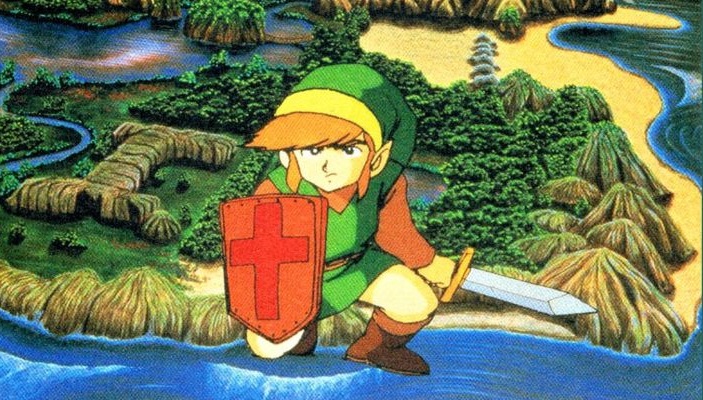
The Legend of Zelda is the first title in the Zelda series, it has marked the history of video games particularly for it's game mechanics and universe. The player controls Link and must make his way through the forests, graveyards, plains and deserts of the Otherworld to find the secret entrances to the eight dungeons and try to restore the broken Triforce. Among the game's mechanics, it was the first time we saw a continuous world that could be freely explored, power-ups that permanently enhanced the main character's abilities and a battery save feature that allowed players to keep their progress instead of having to start over. The gameplay balanced action sequences with discovery, secrets and exploration.

Feb 21, 198681/100
02 Zelda II: The Adventure of Link cover
Mainline1987

Zelda II: The Adventure of Link

Zelda II: The Adventure of Link is the second major installment in The Legend of Zelda series and the direct sequel to the first game. Like its predecessor, it features dungeons that must be located in the overworld and searched for an item that will prove useful. However, the game presents many very important gameplay changes compared to the previous one, affecting especially the movements and the combat. Moving around the world map involves encounters with enemies that take place on a side-scrolling playfield rather than the top-down perspective for which the series became known.

Jan 14, 198765/100
03 Zelda cover
Mainline1989

Zelda

Zelda is a multiscreen Game & Watch game that was only released in English as a stand-alone system pre-loaded with the single game. It has dual screens which fold in a clamshell design, similar to the Nintendo DS. It was re-released as part of the Nintendo Mini Classics line in 1998 and 2007. The complete game can also be unlocked in Game & Watch Gallery 4 for the Game Boy Advance and Wii U Virtual Console. Its core formula is based on that of the original The Legend of Zelda, where Link must fight through eight dungeons and obtain the eight shards of the Triforce of Wisdom. However, it bears more gameplay similarities to The Adventure of Link, since it is 2D and from a side-on perspective. The game features an original, though minimal storyline.

Aug 26, 1989
04 The Legend of Zelda: A Link to the Past cover
Mainline1991

The Legend of Zelda: A Link to the Past

Venture back to Hyrule and an age of magic and heroes. The predecessors of Link and Zelda face monsters on the march when a menacing magician takes over the kingdom. Only you can prevent his evil plot from shattering the land of Hyrule. In your quest, you'll venture into twisting mazes, dungeons, palaces and shadowy forests. Test your mettle with mighty swords and magical weapons. Or heft a boulder and hurl it at your enemies. If the going gets tough, dive into a river - you can swim to escape! Learn powerful spells, locate magical artifacts and solve the mysteries of the evil magician and the hidden realm of Hyrule.

Nov 21, 199196/100
05 The Legend of Zelda: Link's Awakening cover
Mainline1993

The Legend of Zelda: Link's Awakening

The Legend of Zelda: Link's Awakening is the first title in the series to be released on a handheld system and the only Zelda title on the original Game Boy. The gameplay is mostly similar to its predecessor with a top-down perspective, however there are short sections in dungeons where the game switches to a side-scrolling view with platforming elements. For this new adventure, Link must go onto each of the 7 temples to retrieve a musical instrument that will help awaken the Wind Fish. Along the way, he must search the land and uncover hidden treasures and items that will allow him to progress on his journey. Since its release, Link's Awakening has been popular among fans and critics.

Jun 6, 199383/100
06 Link: The Faces of Evil cover
Mainline1993

Link: The Faces of Evil

Link: The Faces of Evil was the product of a compromise between Nintendo and Philips following their failure to release a CD-ROM based add-on to the Super Nintendo Entertainment System. The Faces of Evil differ from most conventional Zelda games as it is a platformer with a side-scrolling view, similar to The Adventure of Link. Stages are accessed from a world map, with more becoming available as Link clears an area or defeats a boss. The game have been subject to much criticism and Nintendo does not recognize it as part of the series.

Oct 10, 199340/100
07 Zelda: The Wand of Gamelon cover
Mainline1993

Zelda: The Wand of Gamelon

Zelda: The Wand of Gamelon was the product of a compromise between Nintendo and Philips following their failure to release a CD-ROM based add-on to the Super Nintendo Entertainment System. It was developed in tandem with Link: The Faces of Evil and marks the first game where the eponymous princess Zelda is playable. The Wand of Gamelon differ from most conventional Zelda games as it is a platformer with a side-scrolling view, similar to The Adventure of Link. Stages are accessed from a world map, with more becoming available as Zelda clears an area or defeats a boss. The game have been subject to much criticism and Nintendo does not recognize it as part of the series.

Oct 10, 199340/100
08 BS Zelda no Densetsu cover
Remake1995

BS Zelda no Densetsu

BS Zelda no Densetsu was a remake of The Legend of Zelda that was released for the Satellaview attachment of the Super Nintendo Entertainment System in Japan.

Aug 6, 1995
09 Zelda's Adventure cover
Mainline1996

Zelda's Adventure

Zelda's Adventure was the product of a compromise between Nintendo and Philips following their failure to release a CD-ROM based add-on to the Super Nintendo Entertainment System. The game boasts an entirely unique design in comparison to the previous CD-i Zelda titles, emphasizing the difference in production between the developers. Princess Zelda serves as the game's protagonist, making it the second game in the series where she is playable. Zelda's Adventure incorporates a similar top-down view reminiscent of most conventional 2D Zelda games and it also has dungeons. The game have been subject to much criticism and Nintendo does not recognize it as part of the series.

May 10, 199610/100
10 BS Zelda no Densetsu: Inishie no Sekiban cover
Mainline1997

BS Zelda no Densetsu: Inishie no Sekiban

Ancient Stone Tablets was a Japan-Only release for the Legend of Zelda: A Link to the Past. It was an add on made for Satellaview, a system that takes radio broadcasts and processes them into games live. The game came in four weekly broadcasts and made new additions to the original, such as weather, many new dungeons, and a new story. The game was much like a Second Quest or Master Quest of A Link to the Past, sharing a very similar overworld with slight changes and entirely new dungeons. Unlike a Second Quest however, it has an entirely new story. Various actions earned the player points, and these points could later be traded in to Nintendo for different prizes. Ancient Stone Tablets is different from most other Zelda games as the game's central heroes are actually the avatars of the player's ID for the BS-X Broadcasting System (Super Famicon), drawn into Hyrule, which is also true for BS The Legend of Zelda. The difference being that this time the player does not take the place of Link, but takes part in a new tale set after the events of A Link to the Past. The male character wears a green tunic (though others are later available) and a backwards baseball cap. The female character has long red hair and is otherwise almost exactly the same as the male.

Mar 30, 1997
11 The Legend of Zelda: Ocarina of Time cover
Mainline1998

The Legend of Zelda: Ocarina of Time

The Legend of Zelda: Ocarina of Time is the fifth main installment of The Legend of Zelda series and the first to be released for the Nintendo 64. It was one of the most highly anticipated games of its age, and is listed among the greatest video games ever created by numerous websites and magazines. The gameplay of Ocarina of Time was revolutionary for its time, it has arguably made more of an impact on later games in the series than any of its predecessors even though they had the same cores of exploration, dungeons, puzzles and item usage. Among the gameplay mechanics, one of the most noteworthy is the time-traveling system. The game begins with the player controlling the child Link, but later on an adult Link becomes a playable character as well and each of them has certain unique abilities. Ocarina of Time also introduces the use of music to solve puzzles: as new songs are learned, they can be used to solve puzzles, gain access to new areas and warp to different locations. Dungeon exploration is somewhat more puzzle-oriented than in earlier games but they are not too complex.

Nov 21, 199892/100
12 The Legend of Zelda: Majora's Mask cover
Mainline2000

The Legend of Zelda: Majora's Mask

The Legend of Zelda: Majora's Mask is a direct sequel to Ocarina of Time, it utilizes the same engine and visual style as its predecessor. The game retains the traditional elements of Zelda games as well as those introduced in Ocarina of Time, such as active blocking with a shield, various throwing items, and the usage of melodies played on the ocarina to solve puzzles. Compared to the previous Zelda games, this installment is more oriented towards interaction with NPCs and has a larger variety of items, optional quests, and mini-games. It also includes a time system that spans three days, and this cycle must be reset periodically to progress through the game.

Apr 27, 200088/100
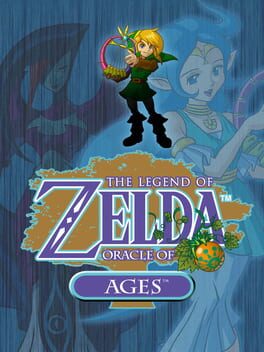
13 The Legend of Zelda: Oracle of Ages cover
Mainline2001

The Legend of Zelda: Oracle of Ages

The Legend of Zelda: Oracle of Ages is one of two Zelda titles released for the Game Boy Color, the other being Oracle of Seasons. The game retain many gameplay elements from Link's Awakening such as the graphics, audio and top-view perspective. It also features eight dungeons and a large overworld to explore like in the previous games. Oracle of Ages is said to be more puzzle-oriented than its counterpart being more action-oriented. After completing one of the two games, both can be linked to form a single linear plot with an alternate ending. Oracle of Ages and Oracle of Seasons were often credited as being two of the top games for the Game Boy Color.

Feb 27, 200190/100
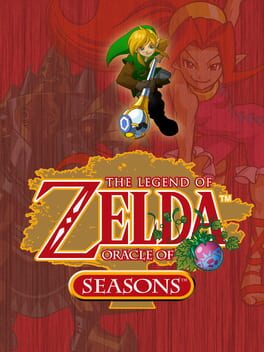
14 The Legend of Zelda: Oracle of Seasons cover
Mainline2001

The Legend of Zelda: Oracle of Seasons

The Legend of Zelda: Oracle of Seasons is one of two Zelda titles released for the Game Boy Color, the other being Oracle of Ages. The game retain many gameplay elements from Link's Awakening such as the graphics, audio and top-view perspective. It also features eight dungeons and a large overworld to explore like in the previous games. Oracle of Seasons is said to be more action-oriented than its counterpart being more puzzle-oriented. After completing one of the two games, both can be linked to form a single linear plot with an alternate ending. Oracle of Seasons and Oracle of Ages were often credited as being two of the top games for the Game Boy Color.

Feb 27, 200187/100
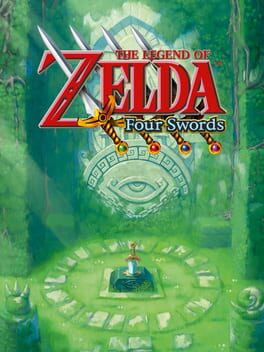
15 The Legend of Zelda: Four Swords cover
Mainline2002

The Legend of Zelda: Four Swords

The Legend of Zelda: Four Swords is a multiplayer game in the Zelda series originally released together with The Legend of Zelda: A Link to the Past for the Game Boy Advance. The game has many features not seen in the series and it requires at least two people to play and uses randomly generated dungeons. During the game, players must collect as many Ruppees as possible while solving puzzles and defeating enemies. When enough Ruppees are collected, the Great Fairy will give the players a key to open the unlockable level. At the end of each level, the one who collects the most Ruppees will be the winner.

Dec 2, 200270/100
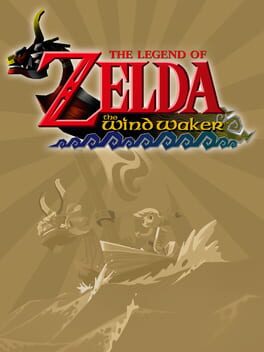
16 The Legend of Zelda: The Wind Waker cover
Mainline2002

The Legend of Zelda: The Wind Waker

The Legend of Zelda: The Wind Waker is the first Zelda game for the Nintendo GameCube and also the first in the series to employ cel-shading, a lighting and texturing technique that results in the game having a cartoon-like appearance. Like its predecessors, The Wind Waker is an action game with puzzle-solving and light role-playing elements. Basic gameplay mechanics are similar to those found in Ocarina of Time, but it differentiates itself with its massive Great Sea which must be explored using a boat named King of Red Lions.

Dec 13, 200289/100
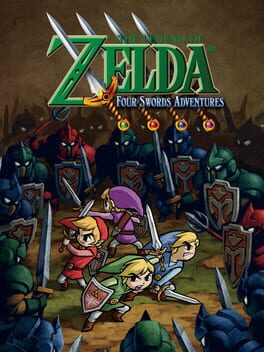
17 The Legend of Zelda: Four Swords Adventures cover
Mainline2004

The Legend of Zelda: Four Swords Adventures

The Legend of Zelda: Four Swords Adventures is the only console Zelda title to date to incorporate multiplayer elements into its main campaign. Because of its single-player elements, Four Swords Adventures is also the first game in the series to allow a single player to control more than one Link at once, and it utilizes various methods to allow the player to make use of the four Links, such as formations. Also it is the only title to break locations and temples up into succinct, separate stages and levels which can be replayed even after beating them once. The game itself, though an innovation in Zelda gameplay, is heavily inspired by the music, graphics, and locations of A Link to the Past.

Jun 7, 200478/100
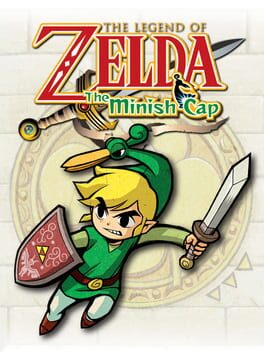
18 The Legend of Zelda: The Minish Cap cover
Mainline2004

The Legend of Zelda: The Minish Cap

The Legend of Zelda: The Minish Cap is a top-down action adventure game that tells the origins of the evil Vaati from Four Swords. Like most other titles in the series, The Minish Cap features the fully explorable land of Hyrule, although it can be viewed from the eyes of a human or the eyes of a Minish, a race of tiny people and an alternate form that Link can transform into. Unlike the multiplayer focus of the other games in the series, The Minish Cap retains the original form of exploration and dungeons as seen in A Link to the Past, Oracle of Seasons, and Oracle of Ages, as well as returning characters and game mechanics such as Malon and the Spin Attack. New features include fusing Kinstones and shrinking to the size of a Minish.

Nov 4, 200487/100
19 The Legend of Zelda: Navi Trackers cover
Remake2004

The Legend of Zelda: Navi Trackers

The Legend of Zelda: Navi Trackers was formerly planned as stand alone game, under the subtitle of Tetra's Trackers, but ended up being released as one of the game in the japanese version of The Legend of Zelda: Four Swords Adventures (Four Swords +). In this game, multiple players, using a combination of the television screen and Game Boy Advances, search for members of Tetra's pirate gang to gain stamps from them, as many as possible within a given time limit. All action takes place on the Game Boy Advance used by each player, with the television screen showing a basic map, and Tetra narrating the action. The game was first intended to be a remake of BS Marvelous: Time Athletic, but changing the franchise to Zelda. Assets based on BS Marvelous were found in the final game.

Dec 31, 2004
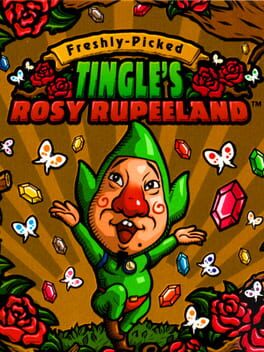
20 Freshly-Picked Tingle's Rosy Rupeeland cover
Mainline2006

Freshly-Picked Tingle's Rosy Rupeeland

Freshly-Picked Tingle's Rosy Rupeeland is an adventure video game developed by Vanpool and published by Nintendo for the Nintendo DS handheld game console. It was first released in Japan, and was released in Europe on September 14, 2007, a year after its Japanese release. Freshly-Picked Tingle's Rosy Rupeeland stars Tingle, a character who has appeared in several games in The Legend of Zelda series starting from The Legend of Zelda: Majora's Mask for the Nintendo 64. It was commercially successful in Japan, selling 234,862 units by the end of 2007.

Sep 2, 200677/100
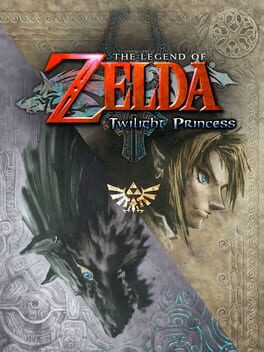
21 The Legend of Zelda: Twilight Princess cover
Mainline2006

The Legend of Zelda: Twilight Princess

The Legend of Zelda: Twilight Princess is the last Zelda game for GameCube, it was highly anticipated by many members of the gaming community and was regarded as finally fulfilling the dreams of those who wanted a much more realistic and mature game than the ones before. The art is similar to the naturalistic style of Ocarina of Time, rather than the cel-shaded look of The Wind Waker. The main adventure takes place in several provinces with dungeons and temples. New to this game is the ability for Link to transform into a Wolf when entering the Twilight. As a wolf, Link can use his senses to solve puzzles and get past obstacles, he can also dig holes to find hearts and rupees. Twilight Princess has received universal acclaim from reviewers and journalists, who cited it as the greatest Zelda game of all time.

Dec 2, 200691/100
22 Tingle's Balloon Fight DS cover
Remake2007

Tingle's Balloon Fight DS

Keep Tingle afloat as you collide with the enemies and pop their balloons. Once they've fallen to the ground, ram into them again to knock them out before they've inflated their balloon and taken back to the skies. This game is a bonus item for platinum members in the Japanese Club Nintendo rewards program.

Apr 10, 200771/100
23 The Legend of Zelda: Phantom Hourglass cover
Mainline2007

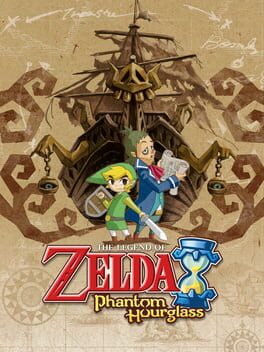
The Legend of Zelda: Phantom Hourglass

The Legend of Zelda: Phantom Hourglass is the first Zelda game for the Nintendo DS and a direct sequel to The Wind Waker. The art direction is the same cel-shaded style as the Wind Waker but is displayed from a classic top-down perspective. The gameplay is structured similarly to other games in the series and is divided into two major gameplay sections: sailing between islands and exploring the islands and their dungeons on foot. The touch screen is used to make Link move and attack instead of buttons, you can also make notes of secret treasures and items on the map simply by writing them down. The game received critical acclaim from reviewers, who agreed that the game was a worthy sequel to The Wind Waker.

Jun 23, 200783/100
24 Link's Crossbow Training cover
Mainline2007

Link's Crossbow Training

Link returns from The Legend of Zelda: Twilight Princess to pick up the Wii Zapper and take aim at a host of targets in this shooting-gallery-style game. Anyone can pick up the Wii Zapper and become a master marksman in the quick-play shooting galleries of Link's Crossbow Training. Dozens of fast-paced stages offer a wide variety of game play, from shooting stationary targets to defending a supply wagon from onrushing hordes of enemies. Multiplayer modes let players and their friends share a Wii Zapper to shoot for the high score. Link's Crossbow Training comes bundled with the Wii Zapper. After a few rounds of Link's Crossbow Training, players will be more than ready to pick up any of the future Wii Zapper titles, like Medal of Honor Heroes 2, Ghost Squad and Resident Evil: The Umbrella Chronicles. Link's Crossbow Training contains three basic game styles: target shooting, defender and ranger. There are 27 stages in total, and these categories represent only generally how each individual stage operates. Each stage's goal is to earn the highest score possible within the time limit. All rounds can be played with multiple players: Players pass the Wii Zapper around and then play one at a time and compete for the high score. Target Shooting: In target-shooting rounds, players shoot bull's-eyes as they pop up on the screen. In early stages, targets are stationary. As the game difficulty increases in later levels, the targets move. Hitting the center of the bull's-eye nets more points, and hitting targets in succession without missing earns combo multipliers. Link can aim anywhere on the screen. Defender: In defender rounds, players remain stationary but can look and aim in all directions – sometimes even in a full 360 degrees – by aiming off screen. Hordes of enemies assault Link, and he must fight them off. These battles have a great deal of variety, from fighting off skeletons in a desert to defending a wagon from boar-riding Bokoblins. Ranger: In ranger rounds, players can move throughout the level using the control stick and aim anywhere they want by aiming the Wii Zapper wherever they want to look. In these missions, Link storms enemy encampments, fights his way through a forest and seeks out his foes while exploring the environments. The Wii Zapper requires the Wii Remote and Nunchuk, housing both in a comfortable and intuitive frame. The control stick on the Nunchuk controls player movement (on stages that allow player movement), while simply aiming the Wii Zapper moves the targeting reticule on the screen. Pulling the trigger fires Link's crossbow. By aiming off screen, players can turn Link to face in a new direction (again, on stages that allow this).

Nov 19, 200766/100
25 The Legend of Zelda: Spirit Tracks cover
Mainline2009

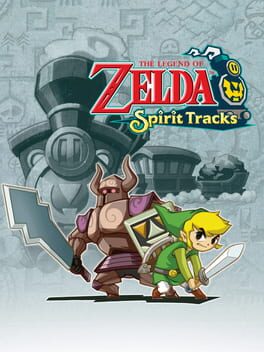
The Legend of Zelda: Spirit Tracks

The Legend of Zelda: Spirit Tracks is the second Zelda game for the Nintendo DS. The art direction is still cel-shading, but the game have notable changes from Phantom Hourglass with more puzzles and a new mode of transportation by train. You have to draw your route to the next area on the map and then let the train run its course. While the train is moving, caution will be needed to avoid obstacles, animals and enemies on the tracks. In certain dungeons, both Link and Zelda will be playable as they will need to work together to solve puzzles.

Dec 7, 200984/100
26 The Legend of Zelda: Ocarina of Time 3D cover
Remake2011

The Legend of Zelda: Ocarina of Time 3D

The Legend of Zelda: Ocarina of Time 3D is a remake of Ocarina of Time with more up-to-date graphics, streamlined UI and different additional game modes. Most textures are significantly more detailed, and many models are more faithful to the game's concept and promotional art. In addition, the frame rate has been increased to 30 FPS compared to the original's 20 FPS.

Jun 16, 201191/100
27 The Legend of Zelda: Skyward Sword cover
Mainline2011

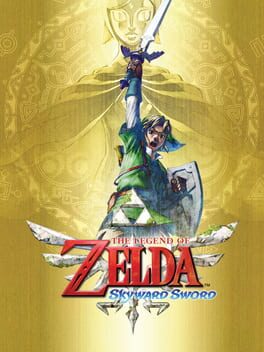
The Legend of Zelda: Skyward Sword

The Legend of Zelda: Skyward Sword is the first Zelda game created specifically with the Wii in mind. The game makes use of the Wii MotionPlus peripheral for sword fighting, with a revised Wii Remote pointing system used for targeting. Skyward Sword is structured very similar to previous Zelda games, as you travel through an overworld in search of temples to visit and once in you solve a series of puzzles before fighting a boss at the end and receive the next bit of plot. The biggest change is that the overworld is more focused on puzzles with only a handful of action.

Nov 18, 201187/100
28 The Legend of Zelda: The Wind Waker HD cover
Remaster2013

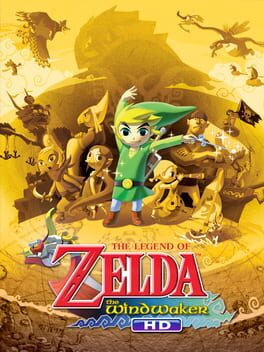
The Legend of Zelda: The Wind Waker HD

The Legend of Zelda: The Wind Waker HD is a remaster of The Wind Waker with an alternate recreation of the original's art style, several gameplay adjustments, a new lighting engine and higher resolution textures.

Sep 20, 201390/100
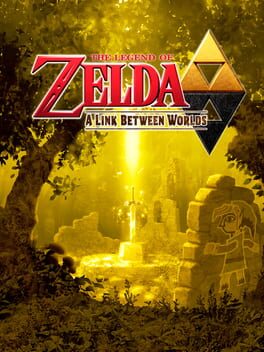
29 The Legend of Zelda: A Link Between Worlds cover
Mainline2013

The Legend of Zelda: A Link Between Worlds

The Legend of Zelda: A Link Between Worlds is the first Zelda game made exclusively for the Nintendo 3DS. It is an indirect sequel to A Link to the Past with the same version of Hyrule but with new characters and gameplay elements. Unlike the series' tradition, many areas of the world are accessible from the beginning of the game and the dungeons can be visited in any order. Puzzles are encountered not only in dungeons but also in the open world, a part of them revolves around the game's 3D visual effect. The 3DS touch-screen display shows the world, dungeon or map depending on where you are.

Nov 22, 201390/100
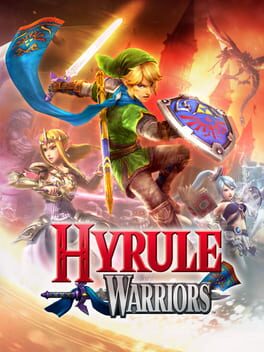
30 Hyrule Warriors cover
Mainline2014

Hyrule Warriors

A Legendary Pairing: Cut down entire legions of enemies as Link, Zelda, Midna and other characters from The Legend of Zelda franchise using over-the-top powerful Dynasty Warriors-style moves. This tour de force through the beloved locales of Hyrule will have players battling some of the fiercest enemies in The Legend of Zelda history. Two players can play local co-op, with one player joining with the Wii U GamePad controller and another with the Wii U Pro Controller or Wii Remote and Nunchuk controllers.

Aug 14, 201474/100
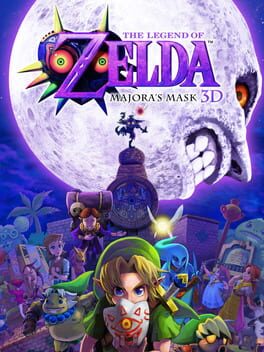
31 The Legend of Zelda: Majora's Mask 3D cover
Remake2015

The Legend of Zelda: Majora's Mask 3D

The Legend of Zelda: Majora's Mask 3D is a remake of the original Nintendo 64 game with more up-to-date graphics, streamlined UI and different additional game modes. Most textures are significantly more detailed, and many models are more faithful to the game's concept and promotional art. In addition, the frame rate has been increased to 30 FPS compared to the original's 20 FPS.

Feb 12, 201591/100
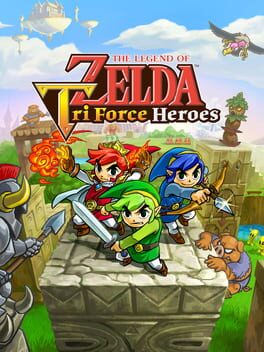
32 The Legend of Zelda: Tri Force Heroes cover
Mainline2015

The Legend of Zelda: Tri Force Heroes

The Legend of Zelda: Tri Force Heroes is the direct sequel to The Legend of Zelda: A Link Between Worlds. The game is similar to the Four Swords games in which Link is accompanied by two other Links in the game's multiplayer mode, but it also allows for a single-player mode in which the other Links are replaced by animated dolls that can be swapped out during the game. The three Link can cooperate in a variety of ways to solve puzzles and coordinate their attacks with the help of on-screen notifications that give clues on what to do.

Oct 22, 201568/100
33 The Legend of Zelda: Twilight Princess HD cover
Remaster2016

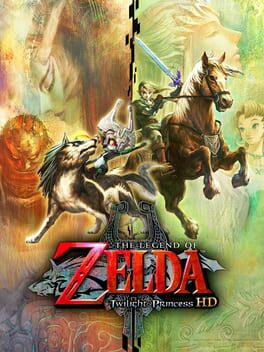
The Legend of Zelda: Twilight Princess HD

The Legend of Zelda: Twilight Princess HD is a Wii U enhanced remaster of the original game. It features graphical upgrades from the original version, higher resolution and minor gameplay changes.

Mar 4, 201685/100
34 The Legend of Zelda: Breath of the Wild cover
Mainline2017

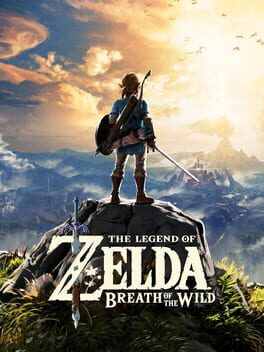
The Legend of Zelda: Breath of the Wild

The Legend of Zelda: Breath of the Wild is the first 3D open-world game in the Zelda series. Link can travel anywhere and be equipped with weapons and armor found throughout the world to grant him various bonuses. Unlike many games in the series, Breath of the Wild does not impose a specific order in which quests or dungeons must be completed. While the game still has environmental obstacles such as weather effects, inhospitable lands, or powerful enemies, many of them can be overcome using the right method. A lot of critics ranked Breath of the Wild as one of the best video games of all time.

Mar 3, 201795/100
35 The Legend of Zelda: Link's Awakening cover
Remake2019

The Legend of Zelda: Link's Awakening

As Link, you awaken in a strange land away from Hyrule, where animals talk and monsters roam. To uncover the truth behind your whereabouts and rouse the legendary Wind Fish, explore Koholint Island and all its trap-ridden dungeons, reimagined in stunning detail for this new release of one of the most beloved The Legend of Zelda games. Along the way, you'll meet a hilarious assortment of charming characters to which you'll never want to say goodbye. In this new version of the game, the classic soundtrack has been reborn with new arrangements, and now you can equip more items at once, review key conversations, and navigate the map in new ways. Try your hand at the renovated mini-games to earn dolls based on the Super Mario series...or Chamber Stones, which you can use to arrange your own Chamber Dungeons. Each one is a puzzle in and of itself!

Sep 20, 201985/100
36 The Legend of Zelda: Skyward Sword HD cover
Remaster2021

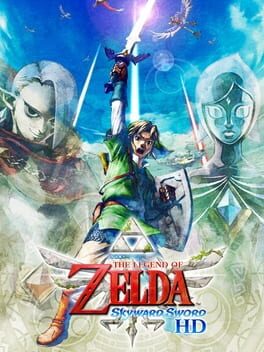
The Legend of Zelda: Skyward Sword HD

The Legend of Zelda: Skyward Sword HD is a remaster of the 2011 game Skyward Sword that features enhanced graphics and frame rate. The game now has a standard resolution of 1080p, an intuitive auto-save function and a streamlined item description among other improvements.

Jul 16, 202180/100
37 The Legend of Zelda: Tears of the Kingdom cover
Mainline2023

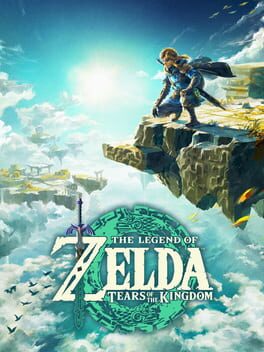
The Legend of Zelda: Tears of the Kingdom

An epic adventure across the land and skies of Hyrule awaits in The Legend of Zelda: Tears of the Kingdom for Nintendo Switch. The adventure is yours to create in a world fueled by your imagination. In this sequel to The Legend of Zelda: Breath of the Wild, you'll decide your own path through the sprawling landscapes of Hyrule and the mysterious islands floating in the vast skies above. Can you harness the power of Link's new abilities to fight back against the malevolent forces that threaten the kingdom?

May 12, 202394/100
38 The Legend of Zelda: Echoes of Wisdom cover
Mainline2024

The Legend of Zelda: Echoes of Wisdom

The people of Hyrule are being stolen away by strange rifts that have appeared, and with a certain swordsman among those missing, it’s up to Princess Zelda to save her kingdom. Team up with the mysterious fairy, Tri, and use the power of the Tri Rod to learn how to create echoes, imitations of things found in the environment. You can then recreate those echoes whenever you like to solve puzzles and defeat enemies. Create echoes like water blocks to reach new heights, make bridges out of old beds, throw rocks at foes, or find your own creative combination of echoes to do things your way. You can even create echoes of monsters to fight at your side in combat!

Sep 26, 202485/100

Sources and method

Built from the public record.

Membership is researched from external official and independent sources. Mainline games, direct spin-offs, remakes, remasters, and standalone expansions are included; DLC, simple ports, duplicate editions, compilation-only duplicates, rumors, cancellations, and cameo-only crossovers are excluded.

  1. database The Legend of Zelda collection — IGDB

    IGDB maintains a distinct collection record for The Legend of Zelda and supplies the authoritative roster used for membership verification.

  2. reference List of best-selling video game franchises

    The independent catalog recognizes The Legend of Zelda as a multi-game franchise and supports its inclusion in this major-series research sweep.