Collection
Best Mainline Zelda Games
A site-ready ranking of mainline Zelda games, including Echoes of Wisdom.
21 games in this collection
Visible Games
The Legend of Zelda: Majora's Mask
The Legend of Zelda: Majora's Mask is a direct sequel to Ocarina of Time, it utilizes the same engine and visual style as its predecessor. The game retains the traditional elements of Zelda games as well as those introduced in Ocarina of Time, such as active blocking with a shield, various throwing items, and the usage of melodies played on the ocarina to solve puzzles. Compared to the previous Zelda games, this installment is more oriented towards interaction with NPCs and has a larger variety of items, optional quests, and mini-games. It also includes a time system that spans three days, and this cycle must be reset periodically to progress through the game.
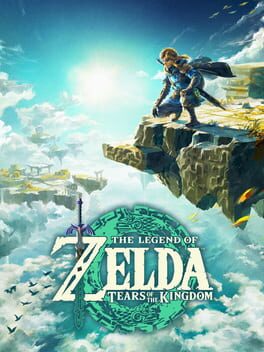
The Legend of Zelda: Tears of the Kingdom
An epic adventure across the land and skies of Hyrule awaits in The Legend of Zelda: Tears of the Kingdom for Nintendo Switch. The adventure is yours to create in a world fueled by your imagination. In this sequel to The Legend of Zelda: Breath of the Wild, you'll decide your own path through the sprawling landscapes of Hyrule and the mysterious islands floating in the vast skies above. Can you harness the power of Link's new abilities to fight back against the malevolent forces that threaten the kingdom?
The Legend of Zelda: Ocarina of Time
The Legend of Zelda: Ocarina of Time is the fifth main installment of The Legend of Zelda series and the first to be released for the Nintendo 64. It was one of the most highly anticipated games of its age, and is listed among the greatest video games ever created by numerous websites and magazines. The gameplay of Ocarina of Time was revolutionary for its time, it has arguably made more of an impact on later games in the series than any of its predecessors even though they had the same cores of exploration, dungeons, puzzles and item usage. Among the gameplay mechanics, one of the most noteworthy is the time-traveling system. The game begins with the player controlling the child Link, but later on an adult Link becomes a playable character as well and each of them has certain unique abilities. Ocarina of Time also introduces the use of music to solve puzzles: as new songs are learned, they can be used to solve puzzles, gain access to new areas and warp to different locations. Dungeon exploration is somewhat more puzzle-oriented than in earlier games but they are not too complex.
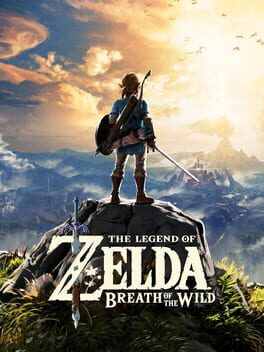
The Legend of Zelda: Breath of the Wild
The Legend of Zelda: Breath of the Wild is the first 3D open-world game in the Zelda series. Link can travel anywhere and be equipped with weapons and armor found throughout the world to grant him various bonuses. Unlike many games in the series, Breath of the Wild does not impose a specific order in which quests or dungeons must be completed. While the game still has environmental obstacles such as weather effects, inhospitable lands, or powerful enemies, many of them can be overcome using the right method. A lot of critics ranked Breath of the Wild as one of the best video games of all time.
The Legend of Zelda: A Link to the Past
Venture back to Hyrule and an age of magic and heroes. The predecessors of Link and Zelda face monsters on the march when a menacing magician takes over the kingdom. Only you can prevent his evil plot from shattering the land of Hyrule. In your quest, you'll venture into twisting mazes, dungeons, palaces and shadowy forests. Test your mettle with mighty swords and magical weapons. Or heft a boulder and hurl it at your enemies. If the going gets tough, dive into a river - you can swim to escape! Learn powerful spells, locate magical artifacts and solve the mysteries of the evil magician and the hidden realm of Hyrule.
The Legend of Zelda: Skyward Sword
The Legend of Zelda: Skyward Sword is the first Zelda game created specifically with the Wii in mind. The game makes use of the Wii MotionPlus peripheral for sword fighting, with a revised Wii Remote pointing system used for targeting. Skyward Sword is structured very similar to previous Zelda games, as you travel through an overworld in search of temples to visit and once in you solve a series of puzzles before fighting a boss at the end and receive the next bit of plot. The biggest change is that the overworld is more focused on puzzles with only a handful of action.
The Legend of Zelda: A Link Between Worlds
The Legend of Zelda: A Link Between Worlds is the first Zelda game made exclusively for the Nintendo 3DS. It is an indirect sequel to A Link to the Past with the same version of Hyrule but with new characters and gameplay elements. Unlike the series' tradition, many areas of the world are accessible from the beginning of the game and the dungeons can be visited in any order. Puzzles are encountered not only in dungeons but also in the open world, a part of them revolves around the game's 3D visual effect. The 3DS touch-screen display shows the world, dungeon or map depending on where you are.
The Legend of Zelda: Phantom Hourglass
The Legend of Zelda: Phantom Hourglass is the first Zelda game for the Nintendo DS and a direct sequel to The Wind Waker. The art direction is the same cel-shaded style as the Wind Waker but is displayed from a classic top-down perspective. The gameplay is structured similarly to other games in the series and is divided into two major gameplay sections: sailing between islands and exploring the islands and their dungeons on foot. The touch screen is used to make Link move and attack instead of buttons, you can also make notes of secret treasures and items on the map simply by writing them down. The game received critical acclaim from reviewers, who agreed that the game was a worthy sequel to The Wind Waker.
The Legend of Zelda: Link's Awakening
The Legend of Zelda: Link's Awakening is the first title in the series to be released on a handheld system and the only Zelda title on the original Game Boy. The gameplay is mostly similar to its predecessor with a top-down perspective, however there are short sections in dungeons where the game switches to a side-scrolling view with platforming elements. For this new adventure, Link must go onto each of the 7 temples to retrieve a musical instrument that will help awaken the Wind Fish. Along the way, he must search the land and uncover hidden treasures and items that will allow him to progress on his journey. Since its release, Link's Awakening has been popular among fans and critics.
The Legend of Zelda: Oracle of Ages
The Legend of Zelda: Oracle of Ages is one of two Zelda titles released for the Game Boy Color, the other being Oracle of Seasons. The game retain many gameplay elements from Link's Awakening such as the graphics, audio and top-view perspective. It also features eight dungeons and a large overworld to explore like in the previous games. Oracle of Ages is said to be more puzzle-oriented than its counterpart being more action-oriented. After completing one of the two games, both can be linked to form a single linear plot with an alternate ending. Oracle of Ages and Oracle of Seasons were often credited as being two of the top games for the Game Boy Color.
The Legend of Zelda: Oracle of Seasons
The Legend of Zelda: Oracle of Seasons is one of two Zelda titles released for the Game Boy Color, the other being Oracle of Ages. The game retain many gameplay elements from Link's Awakening such as the graphics, audio and top-view perspective. It also features eight dungeons and a large overworld to explore like in the previous games. Oracle of Seasons is said to be more action-oriented than its counterpart being more puzzle-oriented. After completing one of the two games, both can be linked to form a single linear plot with an alternate ending. Oracle of Seasons and Oracle of Ages were often credited as being two of the top games for the Game Boy Color.
The Legend of Zelda: The Minish Cap
The Legend of Zelda: The Minish Cap is a top-down action adventure game that tells the origins of the evil Vaati from Four Swords. Like most other titles in the series, The Minish Cap features the fully explorable land of Hyrule, although it can be viewed from the eyes of a human or the eyes of a Minish, a race of tiny people and an alternate form that Link can transform into. Unlike the multiplayer focus of the other games in the series, The Minish Cap retains the original form of exploration and dungeons as seen in A Link to the Past, Oracle of Seasons, and Oracle of Ages, as well as returning characters and game mechanics such as Malon and the Spin Attack. New features include fusing Kinstones and shrinking to the size of a Minish.