Research-backed game lineage

Donkey Kong

Donkey Kong is included in the Series Atlas after independent recognition and an authoritative game-by-game roster audit. Editions, simple ports, DLC, bundles, canceled projects, and cameo-only appearances are excluded.

22 curated games 1981–2025 release span 0 connected branches
Donkey Kong coverDonkey Kong Junior coverGreen House coverDonkey Kong II coverMario Bros. cover

Release chronology

The complete path.

Ordered by researched series position, then original release date. Ports, DLC, and duplicate editions are intentionally excluded.

22 games in this lineage

01 Donkey Kong cover
Mainline1981

Donkey Kong

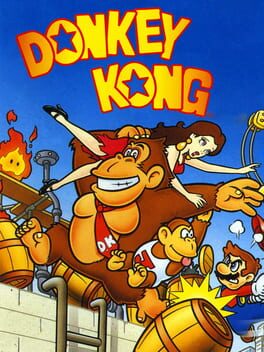
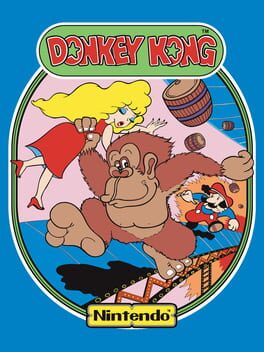
Donkey Kong is not only Nintendo's first real smash hit for the company, but marks the introduction for two of their most popular mascots: Mario (originally "Jumpman") and Donkey Kong. The game is a platform-action game that has Mario scale four different industrial themed levels (construction zone, cement factory, an elevator-themed level, and removing rivets from girders) in an attempt to save the damsel in distress, Pauline, from the big ape before the timer runs out. Donkey Kong is also notable for being one of the first complete narratives in video game form, told through simplistic cut scenes that advance the story.

Jul 9, 198172/100
02 Donkey Kong Junior cover
Mainline1982

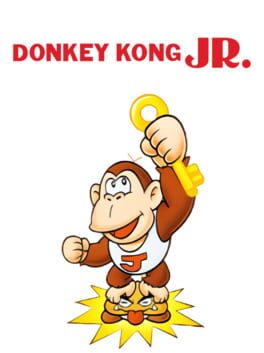
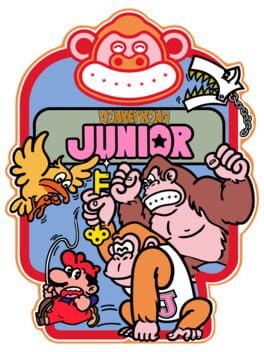
Donkey Kong Junior

Donkey Kong Junior is the direct sequel to Donkey Kong. In this game, Mario plays the antagonist, finally having captured Donkey Kong, and has put the ape in a locked cage. As Donkey Kong Jr., players will have to make their way through four different levels (Vines, Springboard, Chains and Mario's Hideout) in an attempt to find keys to free the little monkey's father.

Jun 30, 198272/100
03 Green House cover
Mainline1982

Green House

Greenhouse is a game in the Game & Watch series. The player controls Stanley, and the objective is to spray inchworms and spiders that try to eat the flowers in a greenhouse. The inchworms crawl along vines on the top screen, while the spiders crawl along webs on the bottom screen, and the player has to try to hit them with a spray gun before they reach the flowers.

Dec 6, 1982
04 Donkey Kong II cover
Mainline1983

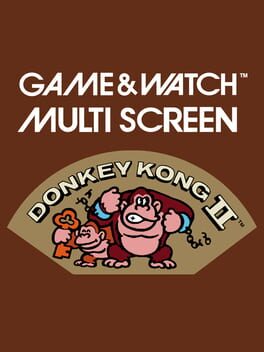
Donkey Kong II

Donkey Kong II was developed by Nintendo R&D1 and released as part of the Game & Watch Multi Screen series, featuring two LCD screens. It was released in 1983. Donkey Kong Jr. has to touch a key, then it moves up to the top screen. Donkey Kong Jr. has to climb to the top screen while avoiding things such as electrical wires. When he gets to the top screen, Donkey Kong Jr. will have to touch the key again, and it will move to the keyhole of one of the chains. Donkey Kong Jr has to climb up the rope below the keyhole, while avoiding birds. When he gets to the top of the rope, one of the chains will unlock. He has to do this 4 times until he saves Donkey Kong. After that, the game will start over, at a somewhat faster pace.

Mar 7, 198370/100
05 Mario Bros. cover
Mainline1983

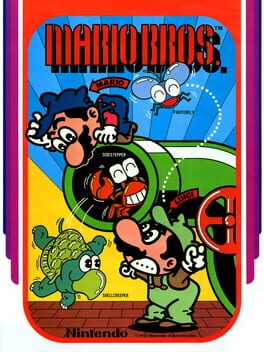
Mario Bros.

Mario Bros. is an arcade game published by Nintendo and developed by Shigeru Miyamoto. The platform puzzle which first introduced Luigi to the world has both single and multiplayer action with two differing game types, but with the same objective. Crabs, turtles and fighter flies must be cleared out by jumping underneath the platform they sit on, then kicking them away. Each level is cleared when a set number of coins is collected. For the two player mode, the first to collect the set amount of coins wins.

Jul 14, 198370/100
06 Donkey Kong 3 cover
Mainline1983

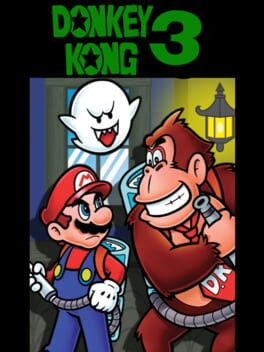
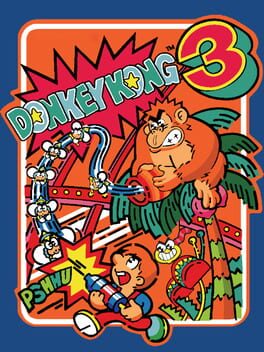
Donkey Kong 3

Stanley is a bugman. Donkey Kong has taken refuge in his greenhouse and it is now up to Stanley to stop the ape from stirring up any more insects that will soon destroy his flowers. Stanley saves the flowers by spraying bug spray on Donkey Kong.

Oct 31, 198360/100
07 Donkey Kong 3: Dai Gyakushuu cover
Mainline1984

Donkey Kong 3: Dai Gyakushuu

A semi-sequel to Donkey Kong 3, using different play mechanics and a completely new set of levels. Like Mario Bros. Special and Punch Ball Mario Bros., the game is not a port, but more of a semi-sequel to Donkey Kong 3. Stanley the Bugman's ability to jump is removed, along with the need to protect plants, making it much closer to a traditional shooter, à la Galaga. Enemies come down from the top of the screen in groups of five, swooping to the bottom and trying to target Stanley. After swooping around a bit, the enemies will exit the screen (usually from the bottom, though sometimes from the sides) and loop back around to the top. This will continue until Stanley dies, shoots Donkey Kong to the top of the screen, thus completing it, or kills the five insects, all of which take two hits apiece to kill. If Stanley kills all five insects before any of them loop back to the top of the screen, a flag reminiscent of one from Rally-X will appear, and shooting it will net him 1,000 points.

Aug 1, 1984
08 Donkey Kong Circus cover
Remake1984

Donkey Kong Circus

Donkey Kong Circus is a Game & Watch title released as part of the Panorama series. It is a remake of the second Mickey Mouse Game & Watch game, which was released worldwide seven months earlier. The two games' codes even seem to have gotten mixed up, with Mickey Mouse being model "DC-95" and Donkey Kong Circus being "MK-96. Neither the Panorama Screen Mickey Mouse nor Donkey Kong Circus was released in Japan. In the game, Donkey Kong, while balancing on a barrel, has to keep pineapples in the air while avoiding fire coming from flammable barrels.

Sep 6, 1984
09 Donkey Kong Hockey cover
Mainline1984

Donkey Kong Hockey

Donkey Kong Hockey is one of the few two-player Game & Watch games ever manufactured. It was released as a part of the Micro Vs. series. Donkey Kong and Mario must engage each other in a two-player game of ice hockey. The game is colorless, being set up on a small LCD screen. The console is an elliptical shape, while the controllers are small and circular; the console can open up to store the controllers.

Nov 13, 1984
10 Donkey Kong cover
Remake1994

Donkey Kong

Donkey Kong is a Game Boy game which starts out with the premise of being a straight remake of the original Donkey Kong arcade game. Although at first it appears to be just a port, the familiar levels from the arcade game are just a prelude to the real platform jumping adventure. There are 97 levels spread out over 9 worlds. These levels are much more complex than the originals, featuring scrolling backgrounds, numerous objects to collect, and enemies to avoid. Along the way, you will encounter several boss style battles with Donkey Kong, as well. When played on a Super Game Boy, the game is colorized, digitized speech is added and the ending music takes advantage of the SNES sound chip.

Jun 14, 199486/100
11 Donkey Kong Country cover
Mainline1994

Donkey Kong Country

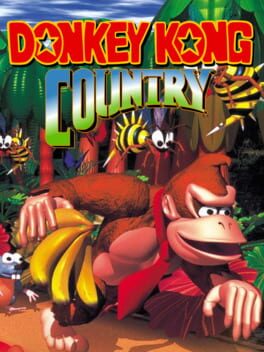
Donkey Kong Country is a side scrolling platformer by British developers Rare in 1994. It featured revolutionary pre-rendered 3D graphics that give the game a very unique look compared to most other games on consoles at the time. The two playable characters featured in the game are the titular character, Donkey Kong and his nephew, Diddy Kong. Together the two swing, climb, jump, swim, cartwheel, ride animals, and blast out of barrels on their way to recover their stolen bannanas from the evil King K. Rool and his Kremling army. The adventure takes you through a variety of different environments and levels that continually change up gameplay. Donkey Kong Country also provides plenty of opportunities for exploration with almost every level having a multitude of collectible, shortcuts, and hidden bonus areas.

Nov 18, 199483/100
12 Fire cover
Remake1997

Fire

Mario and Luigi attempt to catch Toads, Yoshis, and Donkey Kong Jrs. after they jump out the window of Princess Peach's burning castle. The catch is that different characters fall at different speeds: Toads bounce the highest, while Donkey Kong Jrs. bounce the lowest. Yoshi Eggs also appear and contain either a Bob-omb or a Moon (a Super Star in the first game); the eggs break open when they are caught or hit the ground. The player receives two points for catching an egg. If a Bob-omb reaches the carriage, everyone, including the Mario Bros., runs away as the carriage explodes, and the player gets a miss. If the Mario Bros. catch a Moon, the player receives five points. At 200, 500, and 700 points, Peach appears and blows a kiss, sending out a heart for Mario or Luigi to catch to remove a miss. Music is also featured in this version, with the tempo changing depending on the speed of the game.

Feb 1, 1997
13 Manhole cover
Remake1997

Manhole

Manhole was remade with an updated "Modern" version for Game & Watch Gallery. Toad, Donkey Kong Jr., and Mario are the pedestrians in this version, walking at different speeds, while Yoshi is the character the player controls. In this version, four manhole covers can stay up at once, unlike in the original. The manhole covers can drop from characters stepping on them, causing the next pedestrian to fall if Yoshi does not act quickly. Yoshi can also hold a manhole cover in place to keep it from falling. He holds up the upper manhole covers with his head and the lower ones with his tongue. At 200, 500, and 700 points, a Chubby comes out of the ground and throws a heart for Yoshi to catch to remove a miss. This version also features music, with the tempo changing depending on the speed of the game.

Feb 1, 1997
14 Donkey Kong cover
Remake1997

Donkey Kong

A remake of the Game & Watch version, in which Peach substitutes for Pauline.

Sep 27, 1997
15 Parachute cover
Remake1997

Parachute

Mario must catch Toads, Yoshis, and Donkey Kong Jrs. in his rowboat as they float down with their parachutes.

Sep 27, 1997
16 Donkey Kong Jr. cover
Remake1999

Donkey Kong Jr.

DK's son must traverse various stages to free his dad. Goombas, Bullet Bills, and Baby Piranha Plants appear as enemies.

Apr 8, 1999
17 Donkey Kong cover
Remaster2002

Donkey Kong

A researched entry in this series chronology.

Oct 25, 2002
18 Donkey Kong 3 cover
Remake2002

Donkey Kong 3

The Modern version has a few differences. First, Mario replaces Stanley (just like how an Orange Yoshi replaces him for the Modern mode of Greenhouse in Game & Watch Gallery 3). Mario and Donkey Kong also have bubble shooters instead of insecticide sprays. Plus, the setting is a Ghost House. Lastly, the bees have been replaced by a fireball and a Boo. The fireball remains in place until pushed away by the bubbles. The Boo attempts to sneak up on either Mario or Donkey Kong when one of them is busy refilling his bubble shooter. When the fireball or Boo reaches Mario's or Donkey Kong's side, whoever receives it freaks out. Unlike in the Classic version, music is featured.

Oct 25, 2002
19 Donkey Kong Jr. cover
Remaster2002

Donkey Kong Jr.

A researched entry in this series chronology.

Oct 25, 2002
20 Rain Shower cover
Remake2002

Rain Shower

Mario must move his friends away from the water balloons dropped by Bowser in Modern Mode. Also, on Hard Mode, Waluigi occasionally moves the ropes around to make things harder for Mario.

Oct 25, 2002
21 Mario vs. Donkey Kong cover
Mainline2004

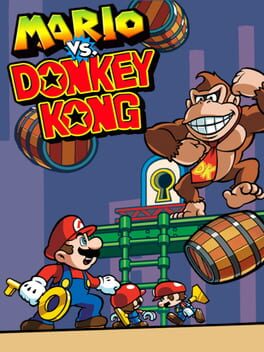
Mario vs. Donkey Kong

After years of apparent goodwill, Mario and Donkey Kong are at it again--this time, on Game Boy Advance. Donkey Kong has stolen all the Mini-Mario toys from the Mario Toy Co., and now it's up to Mario to hunt down his longtime nemesis and retrieve the pilfered goods. As Mario, you must race through challenging levels while finding keys and releasing Mini Marios before time runs out. Along the way, you'll master new moves that can help you overcome new puzzles.

May 24, 200479/100
22 Donkey Kong: Bananza cover
Mainline2025

Donkey Kong: Bananza

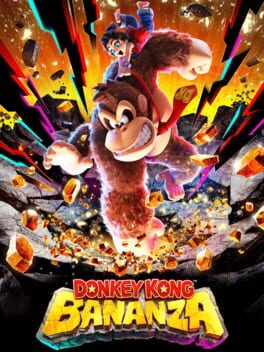
Donkey Kong Bananza is exclusively on Nintendo Switch 2! Explore a vast underground world—by smashing your way through it! Bash, throw, and climb through just about anything in DK’s brand-new 3D platforming action-adventure game!

Jul 17, 202592/100

Sources and method

Built from the public record.

Membership is researched from external official and independent sources. Mainline games, direct spin-offs, remakes, remasters, and standalone expansions are included; DLC, simple ports, duplicate editions, compilation-only duplicates, rumors, cancellations, and cameo-only crossovers are excluded.

  1. database Donkey Kong collection — IGDB

    IGDB maintains a distinct collection record for Donkey Kong and supplies the authoritative roster used for membership verification.

  2. reference List of best-selling video game franchises

    The independent catalog recognizes Donkey Kong as a multi-game franchise and supports its inclusion in this major-series research sweep.